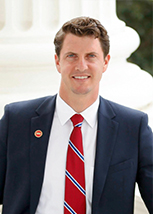
Henry Stern was born in Malibu and represents California’s 27th Senate District, encompassing parts of Los Angeles and Ventura counties. His predecessor was Fran Pavley. An environmental attorney before he became a legislator, Stern also served as counsel to Representative Henry Waxman on the House Energy & Commerce Committee and as Pavley’s senior advisor. The Democrat was elected to the California State Senate on November 8, 2016, defeating Republican Steve Fazio. He became the first millennial elected to the Senate. In 2022, he sought a different place in local government—the District 3 seat on the Los Angeles County Board of Supervisors—but conceded after receiving 24% in the June primary.
ROOTS
Stern was born to a Jewish family in Malibu on April 12, 1982. His father is actor Daniel Stern, best known for playing Marv Murchins in *Home Alone* and *Home Alone 2: Lost in New York*. Henry Stern’s own early pursuit was water polo, which he played in high school and college.
He graduated from Harvard University and then from the UC Berkeley School of Law. His professional work moved among law, government, education and technology. He practiced as an environmental attorney, worked as an American-law lecturer at UCLA and UC Berkeley, taught civics, founded a tech incubator and advocated for juvenile justice.
His résumé included classrooms, legal work, technology and public institutions. Environmental issues also appeared in his legal practice and in his work helping to construct clean-energy projects for businesses.
THE JOB BEFORE THE JOB
Before his Senate election, Stern served as senior advisor to Fran Pavley, the senator he would succeed. He also served as counsel to Representative Henry Waxman on the House Energy & Commerce Committee, helping to construct clean-energy projects for businesses.
Those roles gave Stern experience in congressional committee work and in the office of the senator he would succeed. When he ran for Pavley’s seat in 2016, she endorsed him. So did the Sierra Club and the California League of Conservation Voters. President Barack Obama and Governor Jerry Brown also backed his candidacy.
Stern’s campaign joined environmental policy to other concerns in the district. He called for clean transportation and renewable-energy infrastructure, economic improvement through small businesses, education funding and money for community safety. The coalition around him included environmental organizations, but the platform extended to schools, employment and local government services.
THE PATH THROUGH OFFICE
Stern’s victory over Fazio gave him the seat representing parts of Los Angeles and Ventura counties. His election also made him the first member of the millennial generation to serve in the California State Senate. His path to office included work for Pavley and Waxman and endorsements from Pavley, Obama, Brown, the Sierra Club and the California League of Conservation Voters.
Six years later, Stern entered the race for the District 3 seat on the Los Angeles County Board of Supervisors. He received 24% of the vote in the June 7, 2022, primary and conceded on June 22.
He remained a member of the California State Senate, representing the 27th district.
THE POLICY SIGNATURE
Stern’s documented record includes environmental and clean-energy policy. That record includes environmental law, work on clean-energy projects for businesses, service under Pavley, support from the Sierra Club and the California League of Conservation Voters, and a Senate campaign that included clean transportation and renewable-energy infrastructure.
His work included helping to construct clean-energy projects for businesses, while environmental organizations backed his Senate candidacy. His 2016 platform also included small businesses, clean technology, good-paying jobs and job training, education funding, and funding for local governments to provide safer communities. Separately, he advocated for juvenile justice.
Stern’s résumé extends beyond environmental work to teaching, technology and juvenile justice advocacy. Environmental issues appear repeatedly in his legal work, government service and campaign priorities. Education and community safety were among his 2016 campaign issues. Clean energy appeared in his work for Waxman and in his campaign priorities, while environmental organizations supported his candidacy.
- State Senate · Senate District 27 · 2016–present
Henry Stern was born in Malibu and represents California’s 27th Senate District, encompassing parts of Los Angeles and Ventura counties. His predecessor was Fran Pavley. An environmental attorney before he became a legislator, Stern also served as counsel to Representative Henry Waxman on the House Energy & Commerce Committee and as Pavley’s senior advisor. The Democrat was elected to the California State Senate on November 8, 2016, defeating Republican Steve Fazio. He became the first millennial elected to the Senate. In 2022, he sought a different place in local government—the District 3 seat on the Los Angeles County Board of Supervisors—but conceded after receiving 24% in the June primary.
ROOTS
Stern was born to a Jewish family in Malibu on April 12, 1982. His father is actor Daniel Stern, best known for playing Marv Murchins in *Home Alone* and *Home Alone 2: Lost in New York*. Henry Stern’s own early pursuit was water polo, which he played in high school and college.
He graduated from Harvard University and then from the UC Berkeley School of Law. His professional work moved among law, government, education and technology. He practiced as an environmental attorney, worked as an American-law lecturer at UCLA and UC Berkeley, taught civics, founded a tech incubator and advocated for juvenile justice.
His résumé included classrooms, legal work, technology and public institutions. Environmental issues also appeared in his legal practice and in his work helping to construct clean-energy projects for businesses.
THE JOB BEFORE THE JOB
Before his Senate election, Stern served as senior advisor to Fran Pavley, the senator he would succeed. He also served as counsel to Representative Henry Waxman on the House Energy & Commerce Committee, helping to construct clean-energy projects for businesses.
Those roles gave Stern experience in congressional committee work and in the office of the senator he would succeed. When he ran for Pavley’s seat in 2016, she endorsed him. So did the Sierra Club and the California League of Conservation Voters. President Barack Obama and Governor Jerry Brown also backed his candidacy.
Stern’s campaign joined environmental policy to other concerns in the district. He called for clean transportation and renewable-energy infrastructure, economic improvement through small businesses, education funding and money for community safety. The coalition around him included environmental organizations, but the platform extended to schools, employment and local government services.
THE PATH THROUGH OFFICE
Stern’s victory over Fazio gave him the seat representing parts of Los Angeles and Ventura counties. His election also made him the first member of the millennial generation to serve in the California State Senate. His path to office included work for Pavley and Waxman and endorsements from Pavley, Obama, Brown, the Sierra Club and the California League of Conservation Voters.
Six years later, Stern entered the race for the District 3 seat on the Los Angeles County Board of Supervisors. He received 24% of the vote in the June 7, 2022, primary and conceded on June 22.
He remained a member of the California State Senate, representing the 27th district.
THE POLICY SIGNATURE
Stern’s documented record includes environmental and clean-energy policy. That record includes environmental law, work on clean-energy projects for businesses, service under Pavley, support from the Sierra Club and the California League of Conservation Voters, and a Senate campaign that included clean transportation and renewable-energy infrastructure.
His work included helping to construct clean-energy projects for businesses, while environmental organizations backed his Senate candidacy. His 2016 platform also included small businesses, clean technology, good-paying jobs and job training, education funding, and funding for local governments to provide safer communities. Separately, he advocated for juvenile justice.
Stern’s résumé extends beyond environmental work to teaching, technology and juvenile justice advocacy. Environmental issues appear repeatedly in his legal work, government service and campaign priorities. Education and community safety were among his 2016 campaign issues. Clean energy appeared in his work for Waxman and in his campaign priorities, while environmental organizations supported his candidacy.
The record
177 events, each with its sourceRelative to 40th Infantry Division of the California National Guard.
Jewish American Heritage Month.
Jewish American Heritage Month.
Relative to California Holocaust Memorial Day.
California Coastal Act of 1976.
Natural Gas Ratepayer Protection Act.
Regional planning: standardized spatial planning datasets.
Local reconstruction agencies.
Wildfire prevention: state responsibility areas: fire prevention fee.
State agencies: collection and reporting of demographic data: Jewish identity.
Criminal procedure: competence to stand trial.
Covered wildfire mitigation projects: consolidated and expedited review.
Electrical corporations: distributed energy storage systems.
Regional wildfire partnerships.
Natural Resources Agency: Secretariat for International Climate Coordination and Cooperation.
Energy: nuclear powerplants: assessment.
Emergency preparedness: fuel and transportation resources: assessment.
Transportation electrification: grid-integrated vehicle technologies: standards.
Greenhouse Gas Reduction Fund: funding conditions: high-speed rail.
Gas corporations: gas distribution service line replacements: alternatives.
Relative to Children’s Dental Health Month.
Housing: unsheltered homelessness.
Refineries: decommissioning and remediation: cost estimates.
State highway system: wildlife connectivity.
Vehicles: reckless driving: impoundment.
Lanterman-Petris-Short Act: conservatorships.
Child Abuse Prevention Month.
Sale of gasoline: petroleum: branded and unbranded: report.
Energy: reliability planning assessment.
Countering Unmanned Aircraft Systems Task Force.
High and very high fire risk areas: community water systems: preparedness and resiliency.
School facilities: design-build: shade structures.
Pupils: technology-based materials: school-issued electronic devices.
Residential property insurance: home hardening.
Property tax: exclusion from reassessment: home hardening retrofitting improvements.
State Fire Marshal: home hardening.
Pupil instruction: math assessments.
Department of Forestry and Fire Protection: Fire Innovation Unit.