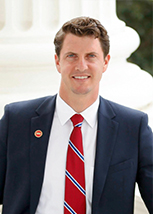
Henry Stern was born in Malibu and represents California’s 27th Senate District, encompassing parts of Los Angeles and Ventura counties. His predecessor was Fran Pavley. An environmental attorney before he became a legislator, Stern also served as counsel to Representative Henry Waxman on the House Energy & Commerce Committee and as Pavley’s senior advisor. The Democrat was elected to the California State Senate on November 8, 2016, defeating Republican Steve Fazio. He became the first millennial elected to the Senate. In 2022, he sought a different place in local government—the District 3 seat on the Los Angeles County Board of Supervisors—but conceded after receiving 24% in the June primary.
ROOTS
Stern was born to a Jewish family in Malibu on April 12, 1982. His father is actor Daniel Stern, best known for playing Marv Murchins in *Home Alone* and *Home Alone 2: Lost in New York*. Henry Stern’s own early pursuit was water polo, which he played in high school and college.
He graduated from Harvard University and then from the UC Berkeley School of Law. His professional work moved among law, government, education and technology. He practiced as an environmental attorney, worked as an American-law lecturer at UCLA and UC Berkeley, taught civics, founded a tech incubator and advocated for juvenile justice.
His résumé included classrooms, legal work, technology and public institutions. Environmental issues also appeared in his legal practice and in his work helping to construct clean-energy projects for businesses.
THE JOB BEFORE THE JOB
Before his Senate election, Stern served as senior advisor to Fran Pavley, the senator he would succeed. He also served as counsel to Representative Henry Waxman on the House Energy & Commerce Committee, helping to construct clean-energy projects for businesses.
Those roles gave Stern experience in congressional committee work and in the office of the senator he would succeed. When he ran for Pavley’s seat in 2016, she endorsed him. So did the Sierra Club and the California League of Conservation Voters. President Barack Obama and Governor Jerry Brown also backed his candidacy.
Stern’s campaign joined environmental policy to other concerns in the district. He called for clean transportation and renewable-energy infrastructure, economic improvement through small businesses, education funding and money for community safety. The coalition around him included environmental organizations, but the platform extended to schools, employment and local government services.
THE PATH THROUGH OFFICE
Stern’s victory over Fazio gave him the seat representing parts of Los Angeles and Ventura counties. His election also made him the first member of the millennial generation to serve in the California State Senate. His path to office included work for Pavley and Waxman and endorsements from Pavley, Obama, Brown, the Sierra Club and the California League of Conservation Voters.
Six years later, Stern entered the race for the District 3 seat on the Los Angeles County Board of Supervisors. He received 24% of the vote in the June 7, 2022, primary and conceded on June 22.
He remained a member of the California State Senate, representing the 27th district.
THE POLICY SIGNATURE
Stern’s documented record includes environmental and clean-energy policy. That record includes environmental law, work on clean-energy projects for businesses, service under Pavley, support from the Sierra Club and the California League of Conservation Voters, and a Senate campaign that included clean transportation and renewable-energy infrastructure.
His work included helping to construct clean-energy projects for businesses, while environmental organizations backed his Senate candidacy. His 2016 platform also included small businesses, clean technology, good-paying jobs and job training, education funding, and funding for local governments to provide safer communities. Separately, he advocated for juvenile justice.
Stern’s résumé extends beyond environmental work to teaching, technology and juvenile justice advocacy. Environmental issues appear repeatedly in his legal work, government service and campaign priorities. Education and community safety were among his 2016 campaign issues. Clean energy appeared in his work for Waxman and in his campaign priorities, while environmental organizations supported his candidacy.
- State Senate · Senate District 27 · 2016–present
Henry Stern was born in Malibu and represents California’s 27th Senate District, encompassing parts of Los Angeles and Ventura counties. His predecessor was Fran Pavley. An environmental attorney before he became a legislator, Stern also served as counsel to Representative Henry Waxman on the House Energy & Commerce Committee and as Pavley’s senior advisor. The Democrat was elected to the California State Senate on November 8, 2016, defeating Republican Steve Fazio. He became the first millennial elected to the Senate. In 2022, he sought a different place in local government—the District 3 seat on the Los Angeles County Board of Supervisors—but conceded after receiving 24% in the June primary.
ROOTS
Stern was born to a Jewish family in Malibu on April 12, 1982. His father is actor Daniel Stern, best known for playing Marv Murchins in *Home Alone* and *Home Alone 2: Lost in New York*. Henry Stern’s own early pursuit was water polo, which he played in high school and college.
He graduated from Harvard University and then from the UC Berkeley School of Law. His professional work moved among law, government, education and technology. He practiced as an environmental attorney, worked as an American-law lecturer at UCLA and UC Berkeley, taught civics, founded a tech incubator and advocated for juvenile justice.
His résumé included classrooms, legal work, technology and public institutions. Environmental issues also appeared in his legal practice and in his work helping to construct clean-energy projects for businesses.
THE JOB BEFORE THE JOB
Before his Senate election, Stern served as senior advisor to Fran Pavley, the senator he would succeed. He also served as counsel to Representative Henry Waxman on the House Energy & Commerce Committee, helping to construct clean-energy projects for businesses.
Those roles gave Stern experience in congressional committee work and in the office of the senator he would succeed. When he ran for Pavley’s seat in 2016, she endorsed him. So did the Sierra Club and the California League of Conservation Voters. President Barack Obama and Governor Jerry Brown also backed his candidacy.
Stern’s campaign joined environmental policy to other concerns in the district. He called for clean transportation and renewable-energy infrastructure, economic improvement through small businesses, education funding and money for community safety. The coalition around him included environmental organizations, but the platform extended to schools, employment and local government services.
THE PATH THROUGH OFFICE
Stern’s victory over Fazio gave him the seat representing parts of Los Angeles and Ventura counties. His election also made him the first member of the millennial generation to serve in the California State Senate. His path to office included work for Pavley and Waxman and endorsements from Pavley, Obama, Brown, the Sierra Club and the California League of Conservation Voters.
Six years later, Stern entered the race for the District 3 seat on the Los Angeles County Board of Supervisors. He received 24% of the vote in the June 7, 2022, primary and conceded on June 22.
He remained a member of the California State Senate, representing the 27th district.
THE POLICY SIGNATURE
Stern’s documented record includes environmental and clean-energy policy. That record includes environmental law, work on clean-energy projects for businesses, service under Pavley, support from the Sierra Club and the California League of Conservation Voters, and a Senate campaign that included clean transportation and renewable-energy infrastructure.
His work included helping to construct clean-energy projects for businesses, while environmental organizations backed his Senate candidacy. His 2016 platform also included small businesses, clean technology, good-paying jobs and job training, education funding, and funding for local governments to provide safer communities. Separately, he advocated for juvenile justice.
Stern’s résumé extends beyond environmental work to teaching, technology and juvenile justice advocacy. Environmental issues appear repeatedly in his legal work, government service and campaign priorities. Education and community safety were among his 2016 campaign issues. Clean energy appeared in his work for Waxman and in his campaign priorities, while environmental organizations supported his candidacy.
The record
4,928 events, each with its sourceAssembly 3rd Reading AB57 McKinnor et al. By Smallwood-Cuevas
Assembly 3rd Reading AB62 McKinnor et al. By Smallwood-Cuevas
Assembly 3rd Reading AB255 Haney et al. By Caballero
Assembly 3rd Reading AB316 Krell By Umberg
Assembly 3rd Reading AB320 Bennett By Arreguín
Assembly 3rd Reading AB330 Rogers By McNerney
Assembly 3rd Reading AB341 Arambula By Grayson
Assembly 3rd Reading AB367 Bennett et al. By Limón
Assembly 3rd Reading AB368 Ward et al. By Becker
Assembly 3rd Reading AB383 Davies By Ochoa Bogh
Assembly 3rd Reading AB393 Connolly et al. By Richardson
Assembly 3rd Reading AB411 Papan et al. By Blakespear
Assembly 3rd Reading AB440 Ramos et al. By Rubio
Assembly 3rd Reading AB449 Jackson By Durazo
Assembly 3rd Reading AB499 Ortega By Richardson
Assembly 3rd Reading AB506 Bennett et al. By Umberg
Assembly 3rd Reading AB535 Schiavo et al. By Cervantes
Assembly 3rd Reading AB546 Caloza et al. By Limón Urgency Clause
Assembly 3rd Reading AB560 Addis et al. By Cortese
Assembly 3rd Reading AB648 Zbur et al. By Arreguín
Assembly 3rd Reading AB662 Alvarez By Padilla
Assembly 3rd Reading AB677 Bryan et al. By Durazo
Assembly 3rd Reading AB749 McKinnor et al. By Durazo
Assembly 3rd Reading AB764 Jeff Gonzalez By Cortese
Assembly 3rd Reading AB772 Lowenthal et al. By Ashby
Assembly 3rd Reading AB797 Harabedian By Ashby Urgency Clause
Assembly 3rd Reading AB822 Elhawary By Cabaldon
Assembly 3rd Reading AB828 Mark González By Durazo
Assembly 3rd Reading AB831 Valencia By Cervantes
Assembly 3rd Reading AB836 Stefani et al. By Caballero
Assembly 3rd Reading AB867 Lee et al. By Arreguín
Assembly 3rd Reading AB890 Lee et al. By Ochoa Bogh
Assembly 3rd Reading AB899 Ransom By Caballero
Assembly 3rd Reading AB930 Ward By Cervantes
Assembly 3rd Reading AB952 Elhawary By Seyarto
Assembly 3rd Reading AB953 Pacheco et al. By Umberg
Assembly 3rd Reading AB1041 Bennett et al. By Menjivar
Assembly 3rd Reading AB1075 Bryan et al. By Cervantes
Assembly 3rd Reading AB1103 Ward By Padilla
Assembly 3rd Reading AB1123 Muratsuchi By Limón
Assembly 3rd Reading AB1269 Bryan et al. By Smallwood-Cuevas Urgency Clause
Assembly 3rd Reading AB1296 Bonta et al. By Cabaldon
Assembly 3rd Reading AB1303 Valencia et al. By Gonzalez
Assembly 3rd Reading AB1312 Schiavo By Pérez
Assembly 3rd Reading AB1318 Bonta et al. By McNerney Urgency Clause
Assembly 3rd Reading AB1326 Ahrens By Becker
Assembly 3rd Reading AB1329 Ortega By Caballero
Assembly 3rd Reading AB1340 Wicks et al. By Cortese
Assembly 3rd Reading AB1348 Bains By Pérez
Assembly 3rd Reading AB1378 Rogers et al. By Arreguín