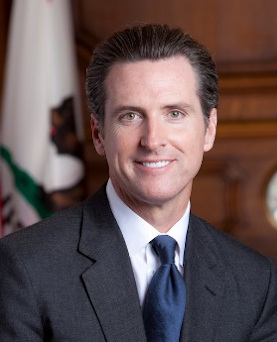
Gavin Newsom
DemocraticGovernor of California
Gavin Newsom is a familiar figure to Californians, having served as their governor since 2019. His path to the governorship was marked by a series of significant roles, including his time as mayor of San Francisco and as the state's lieutenant governor.
BACKGROUND AND FORMATION
Born on October 10, 1967, in San Francisco, Gavin Christopher Newsom grew up in a city that would later become the launching pad for his political career. His early life was shaped by financial instability following his parents' divorce in 1971. His mother, Tessa, worked three jobs to support the family, an experience Newsom credits with instilling a strong work ethic. Despite the challenges, he navigated his education with the help of audiobooks and verbal instruction, as he struggled with dyslexia—a condition that continues to affect him.
Newsom's educational journey began at École Notre Dame des Victoires, a bilingual Catholic school in San Francisco, and continued at Redwood High School in Larkspur, where he graduated in 1985. He then attended Santa Clara University on a partial baseball scholarship, earning a Bachelor of Science in political science in 1989. During his time at university, Newsom spent a semester in Rome, an experience he later described as transformative.
BEFORE PUBLIC OFFICE
In 1991, he and a group of investors founded PlumpJack Associates L.P., which led to the creation of PlumpJack Winery in 1992 with financial backing from family friend Gordon Getty. The business grew to manage 23 ventures, including wineries, restaurants, and hotels, and by 2002, Newsom's holdings were valued at over $6.9 million.
THE PATH TO OFFICE
Newsom's political career began in 1996 when he was appointed to the Parking and Traffic Commission by then-San Francisco Mayor Willie Brown. The following year, Brown appointed him to the San Francisco Board of Supervisors, where he was elected in 1998. As a supervisor, Newsom gained attention for his focus on reforming the city's municipal railway and advocating for public-private partnerships to address housing and homelessness.
His signature initiative during this time was "Care Not Cash," a voter-approved measure that aimed to replace direct cash aid to the homeless with supportive services and housing. The initiative was controversial but successful, significantly reducing the number of people receiving cash payments and raising Newsom's profile as a political leader.
MAYOR OF SAN FRANCISCO
Newsom was elected mayor of San Francisco in 2003, running as a business-friendly centrist Democrat. His tenure as mayor was marked by bold initiatives, including his directive in 2004 to issue marriage licenses to same-sex couples, challenging California state law and garnering national attention. This move solidified his support among progressives and the LGBTQ community, despite the eventual annulment of these marriages by the California Supreme Court.
Reelected in 2007, Newsom continued to focus on housing and homelessness, implementing programs like the San Francisco Homeless Outreach Team and Project Homeless Connect. He also introduced Healthy San Francisco, a pioneering program providing universal healthcare to city residents.
LIEUTENANT GOVERNOR OF CALIFORNIA
In 2010, Newsom was elected lieutenant governor of California, serving under Governor Jerry Brown. During his tenure, he advocated for criminal justice reform, supporting Proposition 47 to reclassify certain nonviolent offenses and endorsing cannabis legalization through Proposition 64. He also focused on education, pushing for initiatives like the California College Promise to offer free community college education and expanding computer science curricula in schools.
GOVERNOR OF CALIFORNIA
Elected governor in 2018, Newsom's administration has prioritized infrastructure, housing, climate action, and gun control. His leadership during the COVID-19 pandemic was met with both praise for decisive action and criticism for personal behavior, leading to an unsuccessful recall effort in 2021. Newsom's commitment to progressive policies remains evident in his support for LGBTQ rights and his focus on healthcare and social services.
THE POLICY SIGNATURE
His initiatives, from "Care Not Cash" to statewide housing policies, demonstrate a commitment to addressing these issues through innovative public-private partnerships. Newsom's advocacy for LGBTQ rights, particularly his early support for same-sex marriage, has been a defining aspect of his public life, aligning him with progressive causes and communities.
- Governor of California · 2019–present
Gavin Newsom is a familiar figure to Californians, having served as their governor since 2019. His path to the governorship was marked by a series of significant roles, including his time as mayor of San Francisco and as the state's lieutenant governor.
BACKGROUND AND FORMATION
Born on October 10, 1967, in San Francisco, Gavin Christopher Newsom grew up in a city that would later become the launching pad for his political career. His early life was shaped by financial instability following his parents' divorce in 1971. His mother, Tessa, worked three jobs to support the family, an experience Newsom credits with instilling a strong work ethic. Despite the challenges, he navigated his education with the help of audiobooks and verbal instruction, as he struggled with dyslexia—a condition that continues to affect him.
Newsom's educational journey began at École Notre Dame des Victoires, a bilingual Catholic school in San Francisco, and continued at Redwood High School in Larkspur, where he graduated in 1985. He then attended Santa Clara University on a partial baseball scholarship, earning a Bachelor of Science in political science in 1989. During his time at university, Newsom spent a semester in Rome, an experience he later described as transformative.
BEFORE PUBLIC OFFICE
In 1991, he and a group of investors founded PlumpJack Associates L.P., which led to the creation of PlumpJack Winery in 1992 with financial backing from family friend Gordon Getty. The business grew to manage 23 ventures, including wineries, restaurants, and hotels, and by 2002, Newsom's holdings were valued at over $6.9 million.
THE PATH TO OFFICE
Newsom's political career began in 1996 when he was appointed to the Parking and Traffic Commission by then-San Francisco Mayor Willie Brown. The following year, Brown appointed him to the San Francisco Board of Supervisors, where he was elected in 1998. As a supervisor, Newsom gained attention for his focus on reforming the city's municipal railway and advocating for public-private partnerships to address housing and homelessness.
His signature initiative during this time was "Care Not Cash," a voter-approved measure that aimed to replace direct cash aid to the homeless with supportive services and housing. The initiative was controversial but successful, significantly reducing the number of people receiving cash payments and raising Newsom's profile as a political leader.
MAYOR OF SAN FRANCISCO
Newsom was elected mayor of San Francisco in 2003, running as a business-friendly centrist Democrat. His tenure as mayor was marked by bold initiatives, including his directive in 2004 to issue marriage licenses to same-sex couples, challenging California state law and garnering national attention. This move solidified his support among progressives and the LGBTQ community, despite the eventual annulment of these marriages by the California Supreme Court.
Reelected in 2007, Newsom continued to focus on housing and homelessness, implementing programs like the San Francisco Homeless Outreach Team and Project Homeless Connect. He also introduced Healthy San Francisco, a pioneering program providing universal healthcare to city residents.
LIEUTENANT GOVERNOR OF CALIFORNIA
In 2010, Newsom was elected lieutenant governor of California, serving under Governor Jerry Brown. During his tenure, he advocated for criminal justice reform, supporting Proposition 47 to reclassify certain nonviolent offenses and endorsing cannabis legalization through Proposition 64. He also focused on education, pushing for initiatives like the California College Promise to offer free community college education and expanding computer science curricula in schools.
GOVERNOR OF CALIFORNIA
Elected governor in 2018, Newsom's administration has prioritized infrastructure, housing, climate action, and gun control. His leadership during the COVID-19 pandemic was met with both praise for decisive action and criticism for personal behavior, leading to an unsuccessful recall effort in 2021. Newsom's commitment to progressive policies remains evident in his support for LGBTQ rights and his focus on healthcare and social services.
THE POLICY SIGNATURE
His initiatives, from "Care Not Cash" to statewide housing policies, demonstrate a commitment to addressing these issues through innovative public-private partnerships. Newsom's advocacy for LGBTQ rights, particularly his early support for same-sex marriage, has been a defining aspect of his public life, aligning him with progressive causes and communities.
The record
0 events, each with its sourceNo events of this type yet — the record is still being assembled.