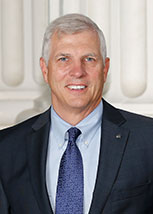
Tom Umberg represents Senate District 34 and has worked as a prosecutor, military officer, lawyer and officeholder, with departures from and returns to elected office. He first won an Assembly seat in 1990, returned to the Assembly in 2004 and reached the state Senate in 2018 after initially trailing by 19 points on election night. Along the way came an unsuccessful campaign for attorney general, a run for county supervisor and federal work on national drug policy. In Sacramento, his assignments have included committees overseeing elections and the judiciary. His record ranges from same-sex marriage and campaign finance to transitional housing, fentanyl and CARE Courts.
BACKGROUND AND FORMATION
Born in Cincinnati in 1955, Umberg graduated with honors from UCLA in 1977 and received his law degree from UC San Francisco, College of the Law, in 1980. He was commissioned as a second lieutenant in the Army, rose to captain and served with the 2nd Infantry Division in South Korea and NATO forces in Italy. His service also included assignments as a paratrooper with the Army Special Operations Command, the Army Special Warfare Center and the XVIIIth Airborne Corps.
Umberg remained in the Army Reserve and rose to colonel. He earned a master’s degree in Strategic Studies from the U.S. Army War College and completed the Kennedy School’s program for senior executives in national security. His decorations include the Bronze Star, two Meritorious Service Medals and two Army Commendation Medals. He met his wife, Brigadier General Robin Umberg, on a military flight to South Korea. They have three children: Brett, Tommy and Erin.
THE PATH TO OFFICE
In 1980, Umberg was appointed an Assistant U.S. Attorney in Orange County and began serving as a military prosecutor, a role he held through 1985. His federal prosecutions included drug dealers, gang members, white-collar criminals and civil-rights cases, with a 100% conviction rate. Among his cases were “Uranium for Tax Dollars” and “Marco Numismatics.”
The turn into electoral politics came on Election Day 1988, when Umberg was the federal prosecutor on duty during the Santa Ana poll guard controversy. He resigned from the U.S. Attorney’s office to run for the Assembly, citing that episode as his reason. In 1990, he defeated incumbent Republican Curt Pringle and was reelected in 1992. He chaired the Environmental Safety and Toxic Materials Committee, then lost the 1994 attorney general’s race to Dan Lungren.
Umberg later directed Bill Clinton’s 1996 California reelection campaign and served from 1997 to 2000 as deputy director of the Office of National Drug Control Policy under Barry McCaffrey. He returned to the Assembly in 2004. In 2005, he supplied the 41st and decisive vote for AB 849, the measure to legalize same-sex marriage in California.
THE RETURN
Umberg sought a state Senate seat in 2006, then ran for the Orange County Board of Supervisors, placing third in 2007 with 21.4% of the vote. His next successful election came in 2018, when he entered the race for the 34th Senate District. He initially trailed by 19 points on election night and ultimately won by 3,200 votes.
Once sworn in, Umberg was named chair of the Senate Committee on Elections and Constitutional Amendments. In 2021, he became chair of the Senate Judiciary Committee and, as chair, held a seat on the Judicial Council of California. As Judiciary Committee chair, he played a key role in the regulation of artificial-intelligence legislation. He was also considered by Gov. Gavin Newsom as a finalist for California attorney general.
The volume of his work is part of the record. Umberg authored more than 60 measures that became law during his Assembly service. In 2025, he introduced 33 bills, the most of any legislator that year.
THE POLICY SIGNATURE
Umberg’s policymaking has included election financing, transitional housing, CARE Courts and fentanyl. His SB 42 would ask voters to end California’s statewide ban on cities and counties establishing public-financing systems for local elections. His committee assignments have included chairing the Senate committees overseeing elections and the judiciary.
On housing, Umberg authored SB 450 in 2019, creating a California Environmental Quality Act exemption to allow cities and counties to purchase dilapidated hotels and motels and convert them into transitional housing. In 2020, Gov. Newsom implemented Project Homekey, which utilized Umberg’s bill to fund cities and counties purchasing hotels and motels for conversion. Newsom later asked him to author SB 1338, creating the state’s CARE Courts.
Fentanyl has also been part of his record. Umberg authored bills addressing fentanyl abuse and introduced SB 44, “Alexandra’s Law,” in 2023. After that bill died in the Senate Appropriations Committee, he reintroduced it with largely the same language as SB 21 in 2024.
Taken together, these measures addressed voters presented with a proposed change to election financing, people needing transitional housing, fentanyl abuse and people reached through CARE Courts. The documented work involved courts, legislative committees, cities and counties; his assignments have included chairing the Senate’s elections and judiciary committees and holding a seat on the Judicial Council of California.
- State Senate · Senate District 34 · 2018–present
Tom Umberg represents Senate District 34 and has worked as a prosecutor, military officer, lawyer and officeholder, with departures from and returns to elected office. He first won an Assembly seat in 1990, returned to the Assembly in 2004 and reached the state Senate in 2018 after initially trailing by 19 points on election night. Along the way came an unsuccessful campaign for attorney general, a run for county supervisor and federal work on national drug policy. In Sacramento, his assignments have included committees overseeing elections and the judiciary. His record ranges from same-sex marriage and campaign finance to transitional housing, fentanyl and CARE Courts.
BACKGROUND AND FORMATION
Born in Cincinnati in 1955, Umberg graduated with honors from UCLA in 1977 and received his law degree from UC San Francisco, College of the Law, in 1980. He was commissioned as a second lieutenant in the Army, rose to captain and served with the 2nd Infantry Division in South Korea and NATO forces in Italy. His service also included assignments as a paratrooper with the Army Special Operations Command, the Army Special Warfare Center and the XVIIIth Airborne Corps.
Umberg remained in the Army Reserve and rose to colonel. He earned a master’s degree in Strategic Studies from the U.S. Army War College and completed the Kennedy School’s program for senior executives in national security. His decorations include the Bronze Star, two Meritorious Service Medals and two Army Commendation Medals. He met his wife, Brigadier General Robin Umberg, on a military flight to South Korea. They have three children: Brett, Tommy and Erin.
THE PATH TO OFFICE
In 1980, Umberg was appointed an Assistant U.S. Attorney in Orange County and began serving as a military prosecutor, a role he held through 1985. His federal prosecutions included drug dealers, gang members, white-collar criminals and civil-rights cases, with a 100% conviction rate. Among his cases were “Uranium for Tax Dollars” and “Marco Numismatics.”
The turn into electoral politics came on Election Day 1988, when Umberg was the federal prosecutor on duty during the Santa Ana poll guard controversy. He resigned from the U.S. Attorney’s office to run for the Assembly, citing that episode as his reason. In 1990, he defeated incumbent Republican Curt Pringle and was reelected in 1992. He chaired the Environmental Safety and Toxic Materials Committee, then lost the 1994 attorney general’s race to Dan Lungren.
Umberg later directed Bill Clinton’s 1996 California reelection campaign and served from 1997 to 2000 as deputy director of the Office of National Drug Control Policy under Barry McCaffrey. He returned to the Assembly in 2004. In 2005, he supplied the 41st and decisive vote for AB 849, the measure to legalize same-sex marriage in California.
THE RETURN
Umberg sought a state Senate seat in 2006, then ran for the Orange County Board of Supervisors, placing third in 2007 with 21.4% of the vote. His next successful election came in 2018, when he entered the race for the 34th Senate District. He initially trailed by 19 points on election night and ultimately won by 3,200 votes.
Once sworn in, Umberg was named chair of the Senate Committee on Elections and Constitutional Amendments. In 2021, he became chair of the Senate Judiciary Committee and, as chair, held a seat on the Judicial Council of California. As Judiciary Committee chair, he played a key role in the regulation of artificial-intelligence legislation. He was also considered by Gov. Gavin Newsom as a finalist for California attorney general.
The volume of his work is part of the record. Umberg authored more than 60 measures that became law during his Assembly service. In 2025, he introduced 33 bills, the most of any legislator that year.
THE POLICY SIGNATURE
Umberg’s policymaking has included election financing, transitional housing, CARE Courts and fentanyl. His SB 42 would ask voters to end California’s statewide ban on cities and counties establishing public-financing systems for local elections. His committee assignments have included chairing the Senate committees overseeing elections and the judiciary.
On housing, Umberg authored SB 450 in 2019, creating a California Environmental Quality Act exemption to allow cities and counties to purchase dilapidated hotels and motels and convert them into transitional housing. In 2020, Gov. Newsom implemented Project Homekey, which utilized Umberg’s bill to fund cities and counties purchasing hotels and motels for conversion. Newsom later asked him to author SB 1338, creating the state’s CARE Courts.
Fentanyl has also been part of his record. Umberg authored bills addressing fentanyl abuse and introduced SB 44, “Alexandra’s Law,” in 2023. After that bill died in the Senate Appropriations Committee, he reintroduced it with largely the same language as SB 21 in 2024.
Taken together, these measures addressed voters presented with a proposed change to election financing, people needing transitional housing, fentanyl abuse and people reached through CARE Courts. The documented work involved courts, legislative committees, cities and counties; his assignments have included chairing the Senate’s elections and judiciary committees and holding a seat on the Judicial Council of California.
The record
4,877 events, each with its sourceSpecial Consent SB862 HEALTH (Menjivar)
Special Consent SB56 Seyarto et al
Special Consent SB444 Hurtado
Special Consent SB338 Becker et al
Special Consent SB447 Umberg
Special Consent SB55 Umberg et al
Senate 3rd Reading SB450 Menjivar
Special Consent SB452 Weber Pierson
Special Consent SB461 Padilla
Special Consent SB293 Pérez
Senate 3rd Reading SB493 Becker et al
Special Consent SB503 Weber Pierson et al
Special Consent SB514 Cabaldon
Special Consent SB855 M.&V.A. (Archuleta)
Senate 3rd Reading SB515 Richardson
Senate 3rd Reading SB847 Reyes By Cortese
Special Consent SB520 Caballero et al
Senate 3rd Reading SR45 Rubio et al
Senate 3rd Reading SR44 McGuire et al
Special Consent SR43 Becker
Senate 3rd Reading SR46 Cabaldon et al
Special Consent SB352 Reyes
Special Consent SB54 Umberg
Special Consent SB35 Umberg
Special Consent SB822 Becker
Special Consent SB353 Alvarado-Gil et al
Senate 3rd Reading SB530 Richardson
Special Consent SB317 Hurtado et al
Special Consent SB290 Smallwood-Cuevas
Special Consent SB284 Seyarto
Senate 3rd Reading SB549 Allen
Special Consent SB31 McNerney et al
Senate 3rd Reading SB28 Umberg et al. Urgency Clause
Special Consent SB553 Cortese
Senate 3rd Reading SB280 Cervantes et al
Senate 3rd Reading SB809 Durazo
Senate 3rd Reading SB279 McNerney et al
Special Consent SB278 Cabaldon et al
Special Consent SB355 Pérez et al
Special Consent SB563 Valladares
Special Consent SB568 Niello
Special Consent SB275 Smallwood-Cuevas
Special Consent SB591 Valladares et al
Senate 3rd Reading SB593 Hurtado
Senate 3rd Reading SB786 Arreguín
Special Consent SB785 Caballero
Senate 3rd Reading SB748 Richardson
Senate 3rd Reading SCR76 Valladares et al
Senate 3rd Reading SB351 Cabaldon
Senate 3rd Reading SB312 Umberg et al