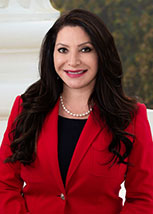
Susan Rubio worked as a public school teacher and Baldwin Park elected official before entering the California Legislature in 2018. She began her teaching career in the Baldwin Park Unified School District, became Baldwin Park’s elected city clerk and a council member, and won a State Senate seat in 2018. She represents the 22nd District in eastern Los Angeles County, including Alhambra, Arcadia and Baldwin Park. In Sacramento, her assignments include insurance, housing, health, transportation and utilities. Her legislative record includes domestic violence measures addressing the statute of limitations in certain cases, police training, hotline information on student identification cards and evidence of coercive control.
ROOTS AND THE CLASSROOM
Rubio was born Dec. 25, 1970, in Ciudad Juárez, Chihuahua, Mexico. Her parents came to the United States twice without proper documentation. The family first settled in Texas and was deported in 1975 after about two years. They returned to the United States in 1977, again without legal status, and settled in Los Angeles.
Rubio became a U.S. citizen in 1994 after being sponsored by her youngest sister, Sylvia, who was born in El Paso. Rubio has Jewish ancestry and is a member of both the Latino Legislative Caucus and the Legislative Jewish Caucus.
She attended East Los Angeles College and earned an undergraduate degree and a master’s degree in education from Azusa Pacific University. Rubio began her teaching career in the Baldwin Park Unified School District and taught in the Monrovia Unified School District for 17 years.
FROM BALDWIN PARK TO SACRAMENTO
Rubio’s first elected office was Baldwin Park city clerk, a post she won in 2005. She was elected to the City Council in 2009 and reelected in 2013. In 2018, after finishing second in the State Senate primary, she defeated former Assemblyman Mike Eng in the November runoff.
Rubio is chair of the Senate Insurance Committee and Senate assistant majority whip. She serves on committees covering Energy, Utilities and Communications; Health; Transportation; and Governmental Organization. She is also a member of the Senate Housing Group and co-chair of the Wildfire Working Group.
She chairs the Senate Select Committee on Domestic Violence. Her other select-committee assignments include children’s well-being, Asian Pacific Islander affairs, mental health, California-Mexico cooperation, and California, Armenia and Artsakh mutual trade, art and cultural exchange. Her caucus memberships include the Los Angeles, San Gabriel Valley and Legislative Women’s caucuses, along with the Latino and Jewish caucuses.
THE RECORD
In December 2024, a plea agreement was unsealed revealing that somebody fitting Rubio’s description was part of a cannabis-involved corruption investigation in 2018. Rubio was not specifically named and denied wrongdoing. The Los Angeles Times reported that she was the only person who fit the description in the agreement. Assemblyman Bill Essayli called for an ethics investigation against her, sending the request to the leaders of the California Assembly and Senate.
Rubio divorced former Assemblyman Roger Hernández in 2016 after winning a restraining order due to allegations of several domestic violence incidents during their marriage. Her sister, Blanca Rubio, is a California state assemblywoman.
Rubio remains a registered voter in Baldwin Park and lives in Sacramento, where she owns property.
THE POLICY SIGNATURE
Domestic violence is a recurring part of Rubio’s legislative record. In February 2019, she introduced SB 273, the Phoenix Act. Signed into law, it lengthened the statute of limitations from three years to five in certain domestic violence cases and required additional police training on dealing with such cases.
Rubio also passed SB 316, requiring the National Domestic Violence Hotline number to be printed on the back of student identification cards. In 2020, she passed SB 1141, allowing domestic violence victims to use evidence of psychologically damaging or abusive behavior, commonly called coercive control, in Family Court or criminal proceedings.
Together, the measures lengthened the statute of limitations in certain domestic violence cases, required additional police training, placed hotline information on the back of student identification cards and allowed evidence of psychologically damaging or abusive behavior in Family Court or criminal proceedings.
- State Senate · Senate District 22 · 2018–present
Susan Rubio worked as a public school teacher and Baldwin Park elected official before entering the California Legislature in 2018. She began her teaching career in the Baldwin Park Unified School District, became Baldwin Park’s elected city clerk and a council member, and won a State Senate seat in 2018. She represents the 22nd District in eastern Los Angeles County, including Alhambra, Arcadia and Baldwin Park. In Sacramento, her assignments include insurance, housing, health, transportation and utilities. Her legislative record includes domestic violence measures addressing the statute of limitations in certain cases, police training, hotline information on student identification cards and evidence of coercive control.
ROOTS AND THE CLASSROOM
Rubio was born Dec. 25, 1970, in Ciudad Juárez, Chihuahua, Mexico. Her parents came to the United States twice without proper documentation. The family first settled in Texas and was deported in 1975 after about two years. They returned to the United States in 1977, again without legal status, and settled in Los Angeles.
Rubio became a U.S. citizen in 1994 after being sponsored by her youngest sister, Sylvia, who was born in El Paso. Rubio has Jewish ancestry and is a member of both the Latino Legislative Caucus and the Legislative Jewish Caucus.
She attended East Los Angeles College and earned an undergraduate degree and a master’s degree in education from Azusa Pacific University. Rubio began her teaching career in the Baldwin Park Unified School District and taught in the Monrovia Unified School District for 17 years.
FROM BALDWIN PARK TO SACRAMENTO
Rubio’s first elected office was Baldwin Park city clerk, a post she won in 2005. She was elected to the City Council in 2009 and reelected in 2013. In 2018, after finishing second in the State Senate primary, she defeated former Assemblyman Mike Eng in the November runoff.
Rubio is chair of the Senate Insurance Committee and Senate assistant majority whip. She serves on committees covering Energy, Utilities and Communications; Health; Transportation; and Governmental Organization. She is also a member of the Senate Housing Group and co-chair of the Wildfire Working Group.
She chairs the Senate Select Committee on Domestic Violence. Her other select-committee assignments include children’s well-being, Asian Pacific Islander affairs, mental health, California-Mexico cooperation, and California, Armenia and Artsakh mutual trade, art and cultural exchange. Her caucus memberships include the Los Angeles, San Gabriel Valley and Legislative Women’s caucuses, along with the Latino and Jewish caucuses.
THE RECORD
In December 2024, a plea agreement was unsealed revealing that somebody fitting Rubio’s description was part of a cannabis-involved corruption investigation in 2018. Rubio was not specifically named and denied wrongdoing. The Los Angeles Times reported that she was the only person who fit the description in the agreement. Assemblyman Bill Essayli called for an ethics investigation against her, sending the request to the leaders of the California Assembly and Senate.
Rubio divorced former Assemblyman Roger Hernández in 2016 after winning a restraining order due to allegations of several domestic violence incidents during their marriage. Her sister, Blanca Rubio, is a California state assemblywoman.
Rubio remains a registered voter in Baldwin Park and lives in Sacramento, where she owns property.
THE POLICY SIGNATURE
Domestic violence is a recurring part of Rubio’s legislative record. In February 2019, she introduced SB 273, the Phoenix Act. Signed into law, it lengthened the statute of limitations from three years to five in certain domestic violence cases and required additional police training on dealing with such cases.
Rubio also passed SB 316, requiring the National Domestic Violence Hotline number to be printed on the back of student identification cards. In 2020, she passed SB 1141, allowing domestic violence victims to use evidence of psychologically damaging or abusive behavior, commonly called coercive control, in Family Court or criminal proceedings.
Together, the measures lengthened the statute of limitations in certain domestic violence cases, required additional police training, placed hotline information on the back of student identification cards and allowed evidence of psychologically damaging or abusive behavior in Family Court or criminal proceedings.
The record
4,386 events, each with its sourceSenate 3rd Reading SCR129 Cortese et al
Senate 3rd Reading SCR169 Gonzalez
Senate 3rd Reading SCR173 Alvarado-Gil et al
Senate 3rd Reading SJR13 Padilla et al
Senate 3rd Reading SB904 Seyarto et al
Senate 3rd Reading SB922 Laird et al
Senate 3rd Reading SB932 Hurtado
Senate 3rd Reading SB960 Cabaldon
Senate 3rd Reading SB971 Choi et al
Senate 3rd Reading SB993 Ochoa Bogh
Senate 3rd Reading SB997 Caballero
Senate 3rd Reading SB1023 Laird et al
Senate 3rd Reading SB1117 Cervantes
Senate 3rd Reading SB1054 Cabaldon et al
Senate 3rd Reading SB1085 Durazo et al
Senate 3rd Reading SB1088 Blakespear
Senate 3rd Reading SB1094 Weber Pierson
Senate 3rd Reading SB1115 Grove
Senate 3rd Reading SB1140 Ashby
Senate 3rd Reading SB1143 Caballero et al
Senate 3rd Reading SB1146 Gonzalez
Senate 3rd Reading SB1177 Cortese
Senate 3rd Reading SB1228 Rubio
Senate 3rd Reading SB1242 Choi
Senate 3rd Reading SB1244 Allen
Senate 3rd Reading SB1268 Gonzalez
Senate 3rd Reading SB1288 Laird
Senate 3rd Reading SB1296 Durazo
Senate 3rd Reading SB1304 Wahab
Senate 3rd Reading SB1307 Jones
Senate 3rd Reading SB1311 Wahab Urgency Clause
Senate 3rd Reading SB1315 Cabaldon
Senate 3rd Reading SB1316 Smallwood-Cuevas
Senate 3rd Reading SB1364 Menjivar
Senate 3rd Reading SB1398 Rubio
Senate 3rd Reading SB1400 Arreguín et al
Senate 3rd Reading SR105 McNerney et al
Senate 3rd Reading SCR151 Umberg et al
Senate 3rd Reading SCR175 Weber Pierson
Senate 3rd Reading SCR176 Ashby
Senate 3rd Reading SCR178 Becker et al
Consent Calendar 2nd SB1072 HOUSING (Arreguín)
Consent Calendar 2nd SB1126 Choi et al
Consent Calendar 2nd SB1151 Cervantes
Consent Calendar 2nd SB1206 INS. (Padilla)
Consent Calendar 2nd SB1253 Laird
Consent Calendar 2nd SB1300 Stern
Consent Calendar 2nd SB1427 PUB. S. (Arreguín)
Consent Calendar 2nd SB1447 HEALTH (Weber Pierson)
Senate 3rd Reading SR111 Padilla et al