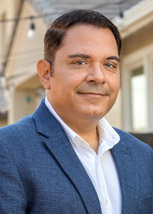
Chula Vista has been the fixed point in Steve Padilla’s public life: Bonita Vista High School, the police department, city boards, the council and the mayor’s office. Now serving in the California State Senate, he came to Sacramento after holding local office, losing it and returning to it. His record runs through the institutions that govern growth, public safety, city finances and the coast. It also includes two firsts in Chula Vista politics: the first Latino elected to the City Council and the first openly gay elected city official. The Senate office is the latest assignment in a career spent moving between elected office and appointed boards.
ROOTS AND THE JOB BEFORE THE JOB
Born in 1967 to a Mexican father and Portuguese mother, Padilla lost his father after he returned from a deployment in the Vietnam War and was killed in an automobile accident. His mother bought a home in Chula Vista, raised the family there and later remarried. Padilla went through the Cub Scouts and Boy Scouts and became involved with the Chula Vista Explorer Scouts.
After Bonita Vista High School, he became the youngest cadet accepted into the Southwestern Police Academy. He spent thirteen years as a police officer, specializing as a detective in domestic violence and child abuse, and served as president of the Chula Vista Police Officers Association. While on the force, he earned a bachelor’s degree in public administration. The City Council appointed him to boards and commissions, including the Board of Ethics and Safety Commission. He also worked as a substitute teacher in the Sweetwater Union High School District.
CITY HALL, DEFEAT AND RETURN
Padilla won a City Council seat in 1994, becoming the first person of Latino descent elected to the Chula Vista City Council, and won reelection in 1998. He contributed to the city’s prohibition on machine tobacco sales and led a change to two-year budget planning. He also served for a time as deputy mayor.
Term limits prevented another consecutive council run in 2002. Instead, Padilla defeated fellow council member Mary Salas and was elected Chula Vista’s 38th mayor on November 5, 2002. He proposed requiring developers to pay for roads and public services before their projects received approval and proposed a unified school district within the city. As mayor, he launched a Give a Book drive that donated more than 100,000 books to underprivileged children in San Diego County.
In August 2005, at the Stonewall Rally of San Diego Pride, Padilla publicly acknowledged that he was gay. He had come out privately to his family in 1999, separated from his wife around that time and later received sole custody of their daughter, Ashleigh. He became Chula Vista’s first openly gay elected city official.
Padilla lost the 2006 mayoral election to Cheryl Cox with 45.76% of the vote. His next council campaign, in 2014, ended in a loss by two votes out of nearly 39,000 cast. He ran for a different council seat in 2016 and won, then won reelection in 2020. That March, he tested positive for COVID-19 and later entered an intensive care unit.
THE POLICY SIGNATURE
Padilla’s policymaking record is rooted in the machinery of local government: ordinances, budget calendars, development conditions, schools, parks and appointed commissions. On the council, that meant restricting tobacco sales and moving Chula Vista to two-year budget cycles. In his mayoral campaign and tenure, it meant asking developers to cover roads and public services before project approval, proposing a citywide unified school district and directing books to children across San Diego County. His stated priorities for a second mayoral term included reducing traffic and improving parks and education.
The other durable part of the record is the California Coastal Commission. Assembly Speaker Fabian Núñez appointed Padilla in July 2005. He was appointed again on May 31, 2017, later served as vice-chair and now serves as chair of the California Coastal Commission. The mechanism of his career has been both elective and appointive: winning votes in Chula Vista, taking seats on boards and commissions, and returning after defeats.
The interests most consistently named in that record are city residents who depend on roads, parks, schools and public services; children, including those reached by the book drive; and communities affected by development decisions. Public safety appears not as a late-added issue but as the work he did before office and the city responsibilities he continued to carry once elected.
- State Senate · Senate District 18 · 2022–present
Chula Vista has been the fixed point in Steve Padilla’s public life: Bonita Vista High School, the police department, city boards, the council and the mayor’s office. Now serving in the California State Senate, he came to Sacramento after holding local office, losing it and returning to it. His record runs through the institutions that govern growth, public safety, city finances and the coast. It also includes two firsts in Chula Vista politics: the first Latino elected to the City Council and the first openly gay elected city official. The Senate office is the latest assignment in a career spent moving between elected office and appointed boards.
ROOTS AND THE JOB BEFORE THE JOB
Born in 1967 to a Mexican father and Portuguese mother, Padilla lost his father after he returned from a deployment in the Vietnam War and was killed in an automobile accident. His mother bought a home in Chula Vista, raised the family there and later remarried. Padilla went through the Cub Scouts and Boy Scouts and became involved with the Chula Vista Explorer Scouts.
After Bonita Vista High School, he became the youngest cadet accepted into the Southwestern Police Academy. He spent thirteen years as a police officer, specializing as a detective in domestic violence and child abuse, and served as president of the Chula Vista Police Officers Association. While on the force, he earned a bachelor’s degree in public administration. The City Council appointed him to boards and commissions, including the Board of Ethics and Safety Commission. He also worked as a substitute teacher in the Sweetwater Union High School District.
CITY HALL, DEFEAT AND RETURN
Padilla won a City Council seat in 1994, becoming the first person of Latino descent elected to the Chula Vista City Council, and won reelection in 1998. He contributed to the city’s prohibition on machine tobacco sales and led a change to two-year budget planning. He also served for a time as deputy mayor.
Term limits prevented another consecutive council run in 2002. Instead, Padilla defeated fellow council member Mary Salas and was elected Chula Vista’s 38th mayor on November 5, 2002. He proposed requiring developers to pay for roads and public services before their projects received approval and proposed a unified school district within the city. As mayor, he launched a Give a Book drive that donated more than 100,000 books to underprivileged children in San Diego County.
In August 2005, at the Stonewall Rally of San Diego Pride, Padilla publicly acknowledged that he was gay. He had come out privately to his family in 1999, separated from his wife around that time and later received sole custody of their daughter, Ashleigh. He became Chula Vista’s first openly gay elected city official.
Padilla lost the 2006 mayoral election to Cheryl Cox with 45.76% of the vote. His next council campaign, in 2014, ended in a loss by two votes out of nearly 39,000 cast. He ran for a different council seat in 2016 and won, then won reelection in 2020. That March, he tested positive for COVID-19 and later entered an intensive care unit.
THE POLICY SIGNATURE
Padilla’s policymaking record is rooted in the machinery of local government: ordinances, budget calendars, development conditions, schools, parks and appointed commissions. On the council, that meant restricting tobacco sales and moving Chula Vista to two-year budget cycles. In his mayoral campaign and tenure, it meant asking developers to cover roads and public services before project approval, proposing a citywide unified school district and directing books to children across San Diego County. His stated priorities for a second mayoral term included reducing traffic and improving parks and education.
The other durable part of the record is the California Coastal Commission. Assembly Speaker Fabian Núñez appointed Padilla in July 2005. He was appointed again on May 31, 2017, later served as vice-chair and now serves as chair of the California Coastal Commission. The mechanism of his career has been both elective and appointive: winning votes in Chula Vista, taking seats on boards and commissions, and returning after defeats.
The interests most consistently named in that record are city residents who depend on roads, parks, schools and public services; children, including those reached by the book drive; and communities affected by development decisions. Public safety appears not as a late-added issue but as the work he did before office and the city responsibilities he continued to carry once elected.
The record
4,581 events, each with its sourceDo pass, but first be re-referred to the Committee on [Judiciary]
Do pass, but first be re-referred to the Committee on [Natural Resources and Water] with the recommendation: To Consent Calendar
Do pass, but first be re-referred to the Committee on [Local Government]
Senate 3rd Reading SCR106 Choi
Do pass, but first be re-referred to the Committee on [Local Government]
Do pass, but first be re-referred to the Committee on [Appropriations]
Do pass as amended, but first amend, and re-refer to the Committee on [Appropriations]
Do pass as amended, but first amend, and re-refer to the Committee on [Appropriations]
Do pass as amended, but first amend, and re-refer to the Committee on [Local Government]
Do pass, but first be re-referred to the Committee on [Local Government]
Assembly 3rd Reading AB226 Calderon et al. By Umberg Urgency Clause
Assembly 2nd Reading AB825 Petrie-Norris et al. By Becker
Assembly 3rd Reading AB888 Calderon et al. By Grayson
Assembly 2nd Reading AB1207 Irwin et al. By Limón Urgency Clause
Assembly 3rd Reading AB1231 Elhawary et al. By Cortese
Unfinished Business SB11 Ashby Concurrence
Unfinished Business SB34 Richardson Concurrence
Unfinished Business SB34 Richardson Motion to Reconsider Concurrence Reconsider
Unfinished Business SB42 Umberg et al. Concurrence
W/O REF. TO FILE SB48 Gonzalez
Unfinished Business SB53 Wiener et al. Concurrence
Unfinished Business SB57 Padilla et al. Concurrence
Unfinished Business SB59 Wiener et al. Urgency Clause Concurrence
Unfinished Business SB63 Wiener et al. Concurrence
Unfinished Business SB67 Seyarto et al. Concurrence
Unfinished Business SB75 Smallwood-Cuevas Concurrence
Unfinished Business SB80 Caballero et al. Concurrence
Unfinished Business SB155 B. & F.R. (Wiener) Concurrence
W/O REF. TO FILE SB158 B. & F.R. (Wiener)
W/O REF. TO FILE SB237 Grayson
Unfinished Business SB245 Reyes Concurrence
W/O REF. TO FILE SB254 Becker
W/O REF. TO FILE SB254 Becker Urgency Clause
Unfinished Business SB271 Reyes Concurrence
Unfinished Business SB274 Cervantes et al. Concurrence
Unfinished Business SB294 Reyes et al. Concurrence
Unfinished Business SB326 Becker et al. Concurrence
Unfinished Business SB378 Wiener Concurrence
Unfinished Business SB351 Cabaldon et al. Concurrence
W/O REF. TO FILE SB352 Reyes
Unfinished Business SB404 Caballero et al. Concurrence
Unfinished Business SB414 Ashby Concurrence
Unfinished Business SB415 Reyes et al. Concurrence
Unfinished Business SB429 Cortese et al. Concurrence
Unfinished Business SB451 Archuleta et al. Concurrence
Unfinished Business SB461 Padilla Concurrence
Unfinished Business SB487 Grayson et al. Concurrence
Unfinished Business SB495 Allen et al. Concurrence
Unfinished Business SB541 Becker et al. Concurrence
Unfinished Business SB547 Pérez et al. Concurrence