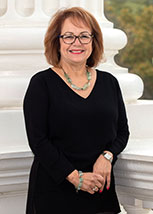
Before María Elena Durazo represented Senate District 26, she spent nearly two decades running HERE Local 11 and more than eight years at the head of the Los Angeles County Federation of Labor. Her route into elected office ran through hotel and garment workers, immigration campaigns, labor boards and the political machinery of organized labor. She entered the Senate in 2018, after saying Donald Trump’s 2016 victory was her main motivation for seeking public office. After redistricting, she began representing the 26th district in 2022. Her legislative record has focused on workers’ rights, immigrant protections, housing policy and economic justice.
THE JOB BEFORE THE JOB
Durazo, the daughter of Mexican immigrants, was born March 20, 1953. She spent summers picking peaches, strawberries and grapes in Central Valley fields. She graduated from St. Mary’s College in Moraga in 1975 and from the Peoples College of Law in Los Angeles in 1985.
Her labor career began as an organizer for the International Ladies’ Garment Workers’ Union. She joined HERE Local 11 in 1983 and led a reform slate against the local leadership of Andrew “Scotty” Allen in 1987. In May 1989, members elected her president of HERE Local 11, a post she held until 2006.
Her work included civil disobedience protests. During the union’s 1993 campaign against the New Otani Hotel, Durazo led workers in such protests and was arrested during a sit-in. She joined the HERE International Union executive board in 1996. From 2000 to 2004, she served on the National AFL-CIO’s Immigration Committee and was its chair at some point during that period. In 2003, she became national director of the Immigrant Workers’ Freedom Ride.
THE PATH TO OFFICE
Durazo’s husband, Miguel Contreras, died in 2005. In February 2006, she was appointed interim executive secretary-treasurer of the Los Angeles County Federation of Labor. She secured the permanent position that May and served until October 2014. The federation reached the height of its influence under Durazo, and she helped push through a minimum-wage law covering large Los Angeles hotels.
She also held national Democratic and labor roles. She endorsed Barack Obama on January 15, 2008, took a three-week leave to campaign for him and served as a national campaign co-chair. That August, she was elected chair of the UCLA Labor Center advisory committee. She became an executive vice president on the national AFL-CIO Executive Council in 2010 and a Democratic National Committee vice chair in 2013.
Durazo announced her Senate candidacy on April 6, 2017. She won and assumed office on December 3, 2018. As of 2026, she chairs the Local Government Committee and sits on the Budget and Fiscal Review, Health, Housing, Judiciary, and Labor, Public Employment and Retirement committees. In 2025, she also ran for the Los Angeles County Board of Supervisors, winning 60.6% of the vote and election without a runoff.
THE POLICY SIGNATURE
Durazo has authored or championed state laws raising wage floors and extending worker protections. She authored Senate Bill 525, establishing California’s first statewide healthcare-specific minimum wage. She championed SB 62 and SB 639, which phased out subminimum wages for garment workers and workers with disabilities. SB 62 addressed garment workers, a group that had also been part of her labor career.
Immigrant access to healthcare forms another major part of the record. Durazo was a driving force behind Health4All, the initiative expanding Medi-Cal to all income-eligible Californians regardless of immigration status. Her efforts led to SB 56, Health4All Seniors, and SB 29, Health4All Adults. She also authored SB 731, expanding record clearance for more than one million Californians.
Her housing votes include opposition to proposals intended to increase or accelerate development. She voted against SB 79, which sought to allow apartment buildings near major public transportation hubs, and against SB 607, which sought to ease environmental review for urban multifamily housing.
Across the legislation, committee posts and earlier union offices, the constituencies include healthcare, garment and disabled workers; immigrants seeking Medi-Cal coverage; and Californians seeking record clearance. Durazo’s public record includes work on wages, worker protections, immigrant protections, housing policy and economic justice.
- State Senate · Senate District 26 · 2022–present
- State Senate · Senate District 24 · 2018–
Before María Elena Durazo represented Senate District 26, she spent nearly two decades running HERE Local 11 and more than eight years at the head of the Los Angeles County Federation of Labor. Her route into elected office ran through hotel and garment workers, immigration campaigns, labor boards and the political machinery of organized labor. She entered the Senate in 2018, after saying Donald Trump’s 2016 victory was her main motivation for seeking public office. After redistricting, she began representing the 26th district in 2022. Her legislative record has focused on workers’ rights, immigrant protections, housing policy and economic justice.
THE JOB BEFORE THE JOB
Durazo, the daughter of Mexican immigrants, was born March 20, 1953. She spent summers picking peaches, strawberries and grapes in Central Valley fields. She graduated from St. Mary’s College in Moraga in 1975 and from the Peoples College of Law in Los Angeles in 1985.
Her labor career began as an organizer for the International Ladies’ Garment Workers’ Union. She joined HERE Local 11 in 1983 and led a reform slate against the local leadership of Andrew “Scotty” Allen in 1987. In May 1989, members elected her president of HERE Local 11, a post she held until 2006.
Her work included civil disobedience protests. During the union’s 1993 campaign against the New Otani Hotel, Durazo led workers in such protests and was arrested during a sit-in. She joined the HERE International Union executive board in 1996. From 2000 to 2004, she served on the National AFL-CIO’s Immigration Committee and was its chair at some point during that period. In 2003, she became national director of the Immigrant Workers’ Freedom Ride.
THE PATH TO OFFICE
Durazo’s husband, Miguel Contreras, died in 2005. In February 2006, she was appointed interim executive secretary-treasurer of the Los Angeles County Federation of Labor. She secured the permanent position that May and served until October 2014. The federation reached the height of its influence under Durazo, and she helped push through a minimum-wage law covering large Los Angeles hotels.
She also held national Democratic and labor roles. She endorsed Barack Obama on January 15, 2008, took a three-week leave to campaign for him and served as a national campaign co-chair. That August, she was elected chair of the UCLA Labor Center advisory committee. She became an executive vice president on the national AFL-CIO Executive Council in 2010 and a Democratic National Committee vice chair in 2013.
Durazo announced her Senate candidacy on April 6, 2017. She won and assumed office on December 3, 2018. As of 2026, she chairs the Local Government Committee and sits on the Budget and Fiscal Review, Health, Housing, Judiciary, and Labor, Public Employment and Retirement committees. In 2025, she also ran for the Los Angeles County Board of Supervisors, winning 60.6% of the vote and election without a runoff.
THE POLICY SIGNATURE
Durazo has authored or championed state laws raising wage floors and extending worker protections. She authored Senate Bill 525, establishing California’s first statewide healthcare-specific minimum wage. She championed SB 62 and SB 639, which phased out subminimum wages for garment workers and workers with disabilities. SB 62 addressed garment workers, a group that had also been part of her labor career.
Immigrant access to healthcare forms another major part of the record. Durazo was a driving force behind Health4All, the initiative expanding Medi-Cal to all income-eligible Californians regardless of immigration status. Her efforts led to SB 56, Health4All Seniors, and SB 29, Health4All Adults. She also authored SB 731, expanding record clearance for more than one million Californians.
Her housing votes include opposition to proposals intended to increase or accelerate development. She voted against SB 79, which sought to allow apartment buildings near major public transportation hubs, and against SB 607, which sought to ease environmental review for urban multifamily housing.
Across the legislation, committee posts and earlier union offices, the constituencies include healthcare, garment and disabled workers; immigrants seeking Medi-Cal coverage; and Californians seeking record clearance. Durazo’s public record includes work on wages, worker protections, immigrant protections, housing policy and economic justice.
The record
4,852 events, each with its sourceSenate 3rd Reading SB783 Rubio
Senate 3rd Reading SB262 Wahab
Senate 3rd Reading SB642 Limón
Senate 3rd Reading SB378 Wiener
Senate 3rd Reading SB34 Richardson
Senate 3rd Reading SB571 Archuleta et al
Senate 3rd Reading SB256 Pérez
Senate 3rd Reading SB610 Pérez et al
Senate 3rd Reading SB581 McGuire et al
Senate 3rd Reading SB36 Umberg et al
Senate 3rd Reading SB524 Arreguín
Senate 3rd Reading SB779 Archuleta
Senate 3rd Reading SB292 Cervantes
Senate 3rd Reading SB625 Wahab et al
Senate 3rd Reading SB690 Caballero et al
Senate 3rd Reading SB473 Padilla
Senate 3rd Reading SB630 Allen et al
Senate 3rd Reading SB71 Wiener et al
Senate 3rd Reading SB629 Durazo et al
Senate 3rd Reading SB16 Blakespear
Senate 3rd Reading SB516 Ashby
Senate 3rd Reading SB384 Wahab
Senate 3rd Reading SB243 Padilla et al
Senate 3rd Reading SB743 Cortese
Senate 3rd Reading SB63 Wiener et al
Senate 3rd Reading SB464 Smallwood-Cuevas
Senate 3rd Reading SB88 Caballero et al
Senate 3rd Reading SB436 Wahab et al
Senate 3rd Reading SB838 Durazo
Senate 3rd Reading SB470 Laird
Senate 3rd Reading SB22 Laird
Senate 3rd Reading SB307 Cervantes
Senate 3rd Reading SB5 Cabaldon
Senate 3rd Reading SB525 Jones
Senate 3rd Reading SB358 Becker
Senate 3rd Reading SB594 Padilla
Senate 3rd Reading SB848 Pérez
Senate 3rd Reading SB767 Richardson et al
Senate 3rd Reading SB804 Archuleta et al
Senate 3rd Reading SB587 Grayson
Senate 3rd Reading SB313 Cervantes et al
Senate 3rd Reading SB702 Limón et al
Senate 3rd Reading SB376 Valladares
Senate 3rd Reading SB670 Cervantes
Senate 3rd Reading SB831 Limón
Senate 3rd Reading SB431 Arreguín
Senate 3rd Reading SB787 McNerney
Senate 3rd Reading SB626 Smallwood-Cuevas
Senate 3rd Reading SB245 Reyes By Arreguín
Senate 3rd Reading SB437 Weber Pierson et al