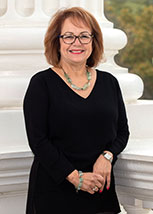
Before María Elena Durazo represented Senate District 26, she spent nearly two decades running HERE Local 11 and more than eight years at the head of the Los Angeles County Federation of Labor. Her route into elected office ran through hotel and garment workers, immigration campaigns, labor boards and the political machinery of organized labor. She entered the Senate in 2018, after saying Donald Trump’s 2016 victory was her main motivation for seeking public office. After redistricting, she began representing the 26th district in 2022. Her legislative record has focused on workers’ rights, immigrant protections, housing policy and economic justice.
THE JOB BEFORE THE JOB
Durazo, the daughter of Mexican immigrants, was born March 20, 1953. She spent summers picking peaches, strawberries and grapes in Central Valley fields. She graduated from St. Mary’s College in Moraga in 1975 and from the Peoples College of Law in Los Angeles in 1985.
Her labor career began as an organizer for the International Ladies’ Garment Workers’ Union. She joined HERE Local 11 in 1983 and led a reform slate against the local leadership of Andrew “Scotty” Allen in 1987. In May 1989, members elected her president of HERE Local 11, a post she held until 2006.
Her work included civil disobedience protests. During the union’s 1993 campaign against the New Otani Hotel, Durazo led workers in such protests and was arrested during a sit-in. She joined the HERE International Union executive board in 1996. From 2000 to 2004, she served on the National AFL-CIO’s Immigration Committee and was its chair at some point during that period. In 2003, she became national director of the Immigrant Workers’ Freedom Ride.
THE PATH TO OFFICE
Durazo’s husband, Miguel Contreras, died in 2005. In February 2006, she was appointed interim executive secretary-treasurer of the Los Angeles County Federation of Labor. She secured the permanent position that May and served until October 2014. The federation reached the height of its influence under Durazo, and she helped push through a minimum-wage law covering large Los Angeles hotels.
She also held national Democratic and labor roles. She endorsed Barack Obama on January 15, 2008, took a three-week leave to campaign for him and served as a national campaign co-chair. That August, she was elected chair of the UCLA Labor Center advisory committee. She became an executive vice president on the national AFL-CIO Executive Council in 2010 and a Democratic National Committee vice chair in 2013.
Durazo announced her Senate candidacy on April 6, 2017. She won and assumed office on December 3, 2018. As of 2026, she chairs the Local Government Committee and sits on the Budget and Fiscal Review, Health, Housing, Judiciary, and Labor, Public Employment and Retirement committees. In 2025, she also ran for the Los Angeles County Board of Supervisors, winning 60.6% of the vote and election without a runoff.
THE POLICY SIGNATURE
Durazo has authored or championed state laws raising wage floors and extending worker protections. She authored Senate Bill 525, establishing California’s first statewide healthcare-specific minimum wage. She championed SB 62 and SB 639, which phased out subminimum wages for garment workers and workers with disabilities. SB 62 addressed garment workers, a group that had also been part of her labor career.
Immigrant access to healthcare forms another major part of the record. Durazo was a driving force behind Health4All, the initiative expanding Medi-Cal to all income-eligible Californians regardless of immigration status. Her efforts led to SB 56, Health4All Seniors, and SB 29, Health4All Adults. She also authored SB 731, expanding record clearance for more than one million Californians.
Her housing votes include opposition to proposals intended to increase or accelerate development. She voted against SB 79, which sought to allow apartment buildings near major public transportation hubs, and against SB 607, which sought to ease environmental review for urban multifamily housing.
Across the legislation, committee posts and earlier union offices, the constituencies include healthcare, garment and disabled workers; immigrants seeking Medi-Cal coverage; and Californians seeking record clearance. Durazo’s public record includes work on wages, worker protections, immigrant protections, housing policy and economic justice.
- State Senate · Senate District 26 · 2022–present
- State Senate · Senate District 24 · 2018–
Before María Elena Durazo represented Senate District 26, she spent nearly two decades running HERE Local 11 and more than eight years at the head of the Los Angeles County Federation of Labor. Her route into elected office ran through hotel and garment workers, immigration campaigns, labor boards and the political machinery of organized labor. She entered the Senate in 2018, after saying Donald Trump’s 2016 victory was her main motivation for seeking public office. After redistricting, she began representing the 26th district in 2022. Her legislative record has focused on workers’ rights, immigrant protections, housing policy and economic justice.
THE JOB BEFORE THE JOB
Durazo, the daughter of Mexican immigrants, was born March 20, 1953. She spent summers picking peaches, strawberries and grapes in Central Valley fields. She graduated from St. Mary’s College in Moraga in 1975 and from the Peoples College of Law in Los Angeles in 1985.
Her labor career began as an organizer for the International Ladies’ Garment Workers’ Union. She joined HERE Local 11 in 1983 and led a reform slate against the local leadership of Andrew “Scotty” Allen in 1987. In May 1989, members elected her president of HERE Local 11, a post she held until 2006.
Her work included civil disobedience protests. During the union’s 1993 campaign against the New Otani Hotel, Durazo led workers in such protests and was arrested during a sit-in. She joined the HERE International Union executive board in 1996. From 2000 to 2004, she served on the National AFL-CIO’s Immigration Committee and was its chair at some point during that period. In 2003, she became national director of the Immigrant Workers’ Freedom Ride.
THE PATH TO OFFICE
Durazo’s husband, Miguel Contreras, died in 2005. In February 2006, she was appointed interim executive secretary-treasurer of the Los Angeles County Federation of Labor. She secured the permanent position that May and served until October 2014. The federation reached the height of its influence under Durazo, and she helped push through a minimum-wage law covering large Los Angeles hotels.
She also held national Democratic and labor roles. She endorsed Barack Obama on January 15, 2008, took a three-week leave to campaign for him and served as a national campaign co-chair. That August, she was elected chair of the UCLA Labor Center advisory committee. She became an executive vice president on the national AFL-CIO Executive Council in 2010 and a Democratic National Committee vice chair in 2013.
Durazo announced her Senate candidacy on April 6, 2017. She won and assumed office on December 3, 2018. As of 2026, she chairs the Local Government Committee and sits on the Budget and Fiscal Review, Health, Housing, Judiciary, and Labor, Public Employment and Retirement committees. In 2025, she also ran for the Los Angeles County Board of Supervisors, winning 60.6% of the vote and election without a runoff.
THE POLICY SIGNATURE
Durazo has authored or championed state laws raising wage floors and extending worker protections. She authored Senate Bill 525, establishing California’s first statewide healthcare-specific minimum wage. She championed SB 62 and SB 639, which phased out subminimum wages for garment workers and workers with disabilities. SB 62 addressed garment workers, a group that had also been part of her labor career.
Immigrant access to healthcare forms another major part of the record. Durazo was a driving force behind Health4All, the initiative expanding Medi-Cal to all income-eligible Californians regardless of immigration status. Her efforts led to SB 56, Health4All Seniors, and SB 29, Health4All Adults. She also authored SB 731, expanding record clearance for more than one million Californians.
Her housing votes include opposition to proposals intended to increase or accelerate development. She voted against SB 79, which sought to allow apartment buildings near major public transportation hubs, and against SB 607, which sought to ease environmental review for urban multifamily housing.
Across the legislation, committee posts and earlier union offices, the constituencies include healthcare, garment and disabled workers; immigrants seeking Medi-Cal coverage; and Californians seeking record clearance. Durazo’s public record includes work on wages, worker protections, immigrant protections, housing policy and economic justice.
The record
150 events, each with its sourceOpen meetings: meeting and teleconference requirements.
Public health: Two-Spirit, Transgender, Gender Nonconforming, and Intersex Wellness and Equity Fund.
California Conservation Corps: Green Collar Certification Program.
Home improvement loans: right to cancel contracts.
Lifeline program: broadband internet access service.
Housing Accountability Act: housing development projects.
Relative to International Women’s Day.
Menstrual products: disposable tampons and pad products: concerning chemicals.
Civil rights: deprivation of federal constitutional rights, privileges, and immunities.
The Youth Rehabilitation and Opportunity Act.
Student financial aid: Free Application for Federal Student Aid (FAFSA) data.
Food vendors and facilities: enforcement activities.
Employment: immigration and work authorization.
CalWORKs: family violence option and gender-based violence information.
Disaster assistance: tenants, mobilehome parks, and mortgages.
Wildfires: fire hazard severity zones: post-wildfire safety areas.
Paid family leave: eligibility: care for designated persons.
Attorney General: immigration enforcement policies.
California Environmental Quality Act: exemptions: housing development projects: natural and protected lands: record of proceedings.
Public contracts: local water infrastructure projects: Construction Manager/General Contractor project delivery method.
Employment: rehiring and retention: displaced workers.
Relative to Teen Dating Violence Awareness and Prevention Month.
Advertising displays: City of Los Angeles: exemption: ordinance.
California Public Records Act: private detention facilities.
Grocery retail store and retail drug establishment employees: self-service checkout.
Prisons: facilities for female offenders.
Public postsecondary education: student employment.
Water Rate Assistance Program.
Local agencies: transient occupancy taxes: short-term rental facilitator.
Relative to President Jimmy Carter Day.
Property taxation: exemption: disabled veteran homeowners.
Peripartum Cardiomyopathy Awareness Month.
Relative to the “2-1-1” information and referral service.
The Workplace Know Your Rights Act.
Employment: labor organization and unfair practices.
In-Home Supportive Services Employer-Employee Relations Act.
Health and care facilities: information sharing.
University of California: home down payment loans for support staff.
Relative to Foster Youth Awareness Month.
Single-room occupancy units: demolition and replacement: housing assistance programs: eligibility for homeless individuals and families.
State government: Immigrant and Refugee Affairs Agency: Office of Immigrant and Refugee Affairs.