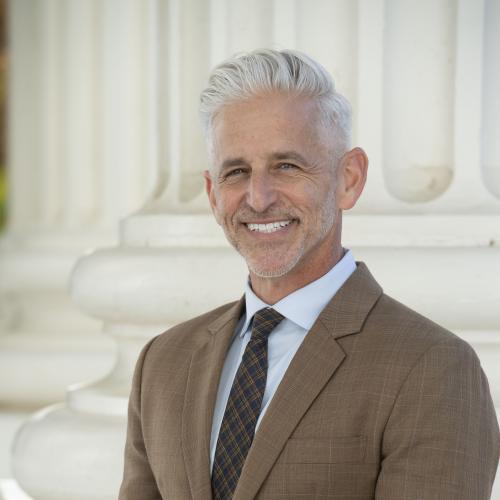
Josh Lowenthal was born in Long Beach and now represents the 69th District, based in Long Beach and Signal Hill. Before seeking a seat in the California State Assembly, he worked as a teacher, owned restaurants and a conference calling company, did community work and considered running for a school board. He is also the son of two politicians, Alan Lowenthal and Bonnie Lowenthal. His 2018 Assembly campaign ended in defeat; his 2022 run, four years later and in a newly drawn district, put him in office. Lowenthal is a businessman and second-generation politician whose route to the Assembly included both private enterprise and a loss at the polls.
ROOTS
Joshua Alder Lowenthal was born in Long Beach on February 15, 1970. He is Jewish. He attended Cornell University, where he served as student body president, and later attended the University of California, San Diego.
Both Alan and Bonnie Lowenthal were politicians. Josh Lowenthal worked as a teacher and businessman before becoming a politician like his parents. He also did community work.
Before becoming an Assembly candidate, he had worked as a teacher and businessman and done community work while considering a school-board run. His successful 2022 Assembly campaign followed his failed run for the same body in 2018.
THE JOB BEFORE THE JOB
Lowenthal worked as a teacher and business owner before entering politics. His businesses included restaurants and a conference calling company, giving him experience in two different kinds of enterprise: one rooted in physical establishments, the other in communications.
He also engaged in community work and considered running for a school board before running for the California State Assembly in 2018.
His pre-Assembly record included work as a teacher and businessman, community work and campaigns for the Assembly in 2018 and 2022.
THE PATH TO OFFICE
Lowenthal first ran for the Assembly in 2018, when the 72nd District seat opened after incumbent Assemblymember Travis Allen chose to run for governor. Lowenthal was the sole Democratic candidate and faced Republican Tyler Diep in the general election.
The campaign included accusations that Diep had used anti-Semitic imagery against Lowenthal. Diep’s campaign denied manipulating images to depict Lowenthal as stereotypically Jewish. Diep later apologized about the campaign mailers. Lowenthal lost the election by 8 points.
Four years later, he tried again under different district lines. In 2022, incumbent Patrick O’Donnell announced his retirement, and Lowenthal ran in the newly redrawn 69th District. Lowenthal placed first and faced Long Beach Councilman Al Austin. He defeated Austin in the general election.
In 2018, Lowenthal lost the contest for a seat opened by Allen’s gubernatorial run. In 2022, he won following O’Donnell’s retirement, defeating a Long Beach councilman.
WHAT TO KNOW
Lowenthal’s documented record describes his path to office but does not identify a policy signature. It contains no legislation, committee assignments, appointments, budget votes or stated policy agenda from which to name the issue for which he is most known in office. Nor does it establish a particular labor, business, neighborhood or advocacy constituency as the principal beneficiary of his Assembly work.
The available particulars are narrower: teaching, ownership of restaurants and a conference calling company, community work, consideration of a school-board race and two campaigns for the Legislature. Those particulars describe his work and activity before office, but they do not support a claim that he has made any one of them his governing priority.
The defensible bottom line is therefore electoral rather than legislative: he returned after losing in 2018 and won the 69th District in 2022. The documented particulars do not establish whose interests he has served through his work in the Assembly.
- State Assembly · Assembly District 69 · 2022–present
Josh Lowenthal was born in Long Beach and now represents the 69th District, based in Long Beach and Signal Hill. Before seeking a seat in the California State Assembly, he worked as a teacher, owned restaurants and a conference calling company, did community work and considered running for a school board. He is also the son of two politicians, Alan Lowenthal and Bonnie Lowenthal. His 2018 Assembly campaign ended in defeat; his 2022 run, four years later and in a newly drawn district, put him in office. Lowenthal is a businessman and second-generation politician whose route to the Assembly included both private enterprise and a loss at the polls.
ROOTS
Joshua Alder Lowenthal was born in Long Beach on February 15, 1970. He is Jewish. He attended Cornell University, where he served as student body president, and later attended the University of California, San Diego.
Both Alan and Bonnie Lowenthal were politicians. Josh Lowenthal worked as a teacher and businessman before becoming a politician like his parents. He also did community work.
Before becoming an Assembly candidate, he had worked as a teacher and businessman and done community work while considering a school-board run. His successful 2022 Assembly campaign followed his failed run for the same body in 2018.
THE JOB BEFORE THE JOB
Lowenthal worked as a teacher and business owner before entering politics. His businesses included restaurants and a conference calling company, giving him experience in two different kinds of enterprise: one rooted in physical establishments, the other in communications.
He also engaged in community work and considered running for a school board before running for the California State Assembly in 2018.
His pre-Assembly record included work as a teacher and businessman, community work and campaigns for the Assembly in 2018 and 2022.
THE PATH TO OFFICE
Lowenthal first ran for the Assembly in 2018, when the 72nd District seat opened after incumbent Assemblymember Travis Allen chose to run for governor. Lowenthal was the sole Democratic candidate and faced Republican Tyler Diep in the general election.
The campaign included accusations that Diep had used anti-Semitic imagery against Lowenthal. Diep’s campaign denied manipulating images to depict Lowenthal as stereotypically Jewish. Diep later apologized about the campaign mailers. Lowenthal lost the election by 8 points.
Four years later, he tried again under different district lines. In 2022, incumbent Patrick O’Donnell announced his retirement, and Lowenthal ran in the newly redrawn 69th District. Lowenthal placed first and faced Long Beach Councilman Al Austin. He defeated Austin in the general election.
In 2018, Lowenthal lost the contest for a seat opened by Allen’s gubernatorial run. In 2022, he won following O’Donnell’s retirement, defeating a Long Beach councilman.
WHAT TO KNOW
Lowenthal’s documented record describes his path to office but does not identify a policy signature. It contains no legislation, committee assignments, appointments, budget votes or stated policy agenda from which to name the issue for which he is most known in office. Nor does it establish a particular labor, business, neighborhood or advocacy constituency as the principal beneficiary of his Assembly work.
The available particulars are narrower: teaching, ownership of restaurants and a conference calling company, community work, consideration of a school-board race and two campaigns for the Legislature. Those particulars describe his work and activity before office, but they do not support a claim that he has made any one of them his governing priority.
The defensible bottom line is therefore electoral rather than legislative: he returned after losing in 2018 and won the 69th District in 2022. The documented particulars do not establish whose interests he has served through his work in the Assembly.
The record
4,694 events, each with its sourceSB 1420 Richardson Consent Calendar Second Day Regular Session
SB 1427 Public Safety Consent Calendar Second Day Regular Session
SB 1431 Elections and Constitutional Amendments Consent Calendar Second Day Regular Session
SB 1432 Elections and Constitutional Amendments Consent Calendar Second Day Regular Session
SB 1444 Labor, Public Employment and Retirement Consent Calendar Second Day Regular Session
SB 1447 Health Consent Calendar Second Day Regular Session
SCR 7 Niello Senate Third Reading By Jeff Gonzalez
SCR 184 Niello Consent Calendar Second Day Regular Session
SCR 190 Cabaldon Consent Calendar Second Day Regular Session
SJR 8 Arreguín Senate Third Reading By Celeste Rodriguez
AB 2106 Patel Concurrence in Senate Amendments
AB 2597 Wicks Third Reading Urgency
ACR 233 Sharp-Collins Consent Calendar Second Day
AB 1778 Patterson Concurrence in Senate Amendments
AB 1923 SORIA Concurrence in Senate Amendments
AB 2056 Alvarez Concurrence in Senate Amendments
AB 2323 McKinnor Concurrence in Senate Amendments
AB 2692 Irwin Concurrence in Senate Amendments
HR 78 Ta Consent Calendar Second Day
HR 124 SOLACHE Assembly Third Reading
SB 96 Umberg Consent Calendar Second Day Regular Session
SB 557 Hurtado Consent Calendar Second Day Regular Session
SB 575 Laird Senate Third Reading By Pellerin
SB 607 Wiener Consent Calendar Second Day Regular Session
SB 832 Allen Consent Calendar Second Day Regular Session
SB 922 Laird Senate Third Reading By Bennett
SB 930 Reyes Senate Third Reading By Pellerin
SB 939 Laird Senate Third Reading By McKinnor
SB 992 Niello Consent Calendar Second Day Regular Session
SB 1082 Niello Consent Calendar Second Day Regular Session
SB 1129 Caballero Consent Calendar Second Day Regular Session
SB 1133 Strickland Consent Calendar Second Day Regular Session
SB 1165 Caballero Senate Third Reading By Carrillo
SB 1429 Elections and Constitutional Amendments Consent Calendar Second Day Regular Session
SB 1430 Elections and Constitutional Amendments Consent Calendar Second Day Regular Session
SCR 113 Grove Consent Calendar Second Day Regular Session
SCR 166 Choi Consent Calendar Second Day Regular Session
SCR 185 Caballero Consent Calendar Second Day Regular Session
SCR 189 Rubio Consent Calendar Second Day Regular Session
SJR 6 Cortese Senate Third Reading By Solache
AB 1651 Dixon Concurrence in Senate Amendments
AB 2134 Addis Concurrence in Senate Amendments
AB 2789 Judiciary Concurrence in Senate Amendments By KALRA
HR 120 Alanis Consent Calendar Second Day
ACR 126 Tangipa Concurrence in Senate Amendments
AJR 27 Harabedian Concurrence in Senate Amendments
SB 897 Choi Consent Calendar Second Day Regular Session
SJR 12 Laird Senate Third Reading By Hart
SJR 14 Cabaldon Consent Calendar Second Day Regular Session
SJR 17 Choi Consent Calendar Second Day Regular Session