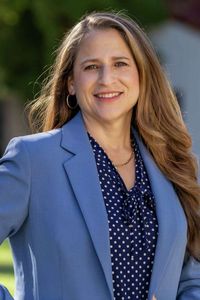
For Assembly District 15, Anamarie Ávila Farías comes to Sacramento through Martinez: born in the city, elected to its council, involved in a lawsuit that changed how its school board members are elected, and twice appointed to a state housing-finance board. She was the first Latina elected to the Martinez City Council, winning a seat in 2012 and serving one term. Elected to represent the district in 2024, she entered the Legislature with housing already a recurring part of her public record. By the end of the 2025 session, her assignments extended from housing and insurance to aging, veterans, water, parks and wildlife.
ROOTS IN MARTINEZ
Ávila Farías was born in Martinez. She is the granddaughter of immigrants from Mexico who came to the United States through the Bracero Program.
In 2012, Martinez voters elected her to the City Council for a single term. The election also gave the council its first Latina member.
Five years after her council election, she joined a group of activists in taking the Martinez Unified School District board to court under the California Voting Rights Act.
The offices and campaigns that followed carried her beyond the city—to a state housing board, a run for the Contra Costa County Board of Supervisors and eventually the Legislature—but Martinez remained a repeated setting in her record.
CITY OFFICE AND A STATE APPOINTMENT
Ávila Farías served one term on the Martinez City Council after her 2012 election.
In 2021, Governor Gavin Newsom reappointed her to the same board.
Those two appointments matter in reading her later Assembly work. They put housing finance into her record well before she became a legislator, under appointments from two governors. Once in the Assembly, she would serve on the standing committee that handles housing and community development, co-chair the Select Committee on Housing Finance and Affordability, and author housing bills during her first session.
Between the two housing-board appointments, Ávila Farías sought county office. In 2016, she ran for the Contra Costa County Board of Supervisors against incumbent Federal Glover. Glover defeated her.
The loss did not end her work in public bodies or electoral politics. By 2024, she was again a candidate, this time for an open path to the state Assembly.
THE SCHOOL-BOARD CASE
In 2017, Ávila Farías and a group of activists filed a lawsuit under the California Voting Rights Act against the Martinez Unified School District board. The case produced a concrete change in the local machinery of representation: the board split representation into districts.
The school district board also paid $90,000 in legal fees related to the lawsuit.
The lawsuit used the California Voting Rights Act to challenge the school board, with the resulting district-based representation changing how seats on that body were organized.
It also returned her public work to the level of government residents encounter directly. In Martinez, the result of the case was not merely a statement or proposal. The board divided its representation into districts and incurred $90,000 in related legal fees.
Ávila Farías took another public position in 2022, this time through a Facebook post. She encouraged a boycott of the Fourth of July because of the Dobbs v. Jackson Women’s Health Organization ruling. Unlike the school-board case, the post did not involve an office, appointment or formal government proceeding. It nevertheless placed her publicly in opposition to the ruling.
THE OPENING FOR THE ASSEMBLY
The route to Assembly District 15 opened in 2024 when incumbent Assemblymember Tim Grayson announced that he would forgo reelection and run for the California State Senate.
Ávila Farías entered the race for Grayson’s Assembly seat. She and Republican Sonia Ledo advanced to the general election. Ávila Farías won, becoming Assembly District 15’s representative in 2024.
The victory came twelve years after her election to the Martinez City Council and eight years after her unsuccessful campaign for the Board of Supervisors. In between were the two gubernatorial appointments to the state housing-finance board, the school-board lawsuit and the public response to the Dobbs ruling.
Her election also changed the scale of her work. The City Council had given her a vote in Martinez city government. The housing-finance appointments placed her on a statewide board. The Assembly gave her a legislative seat, committee assignments and the authority to introduce bills covering California as a whole.
THE ASSEMBLY ASSIGNMENTS
By the end of the 2025 legislative session, Ávila Farías held assignments across five standing committees: Aging and Long-Term Care; Housing and Community Development; Military and Veterans Affairs; Water, Parks and Wildlife; and Insurance.
The list gives her a place in several distinct parts of the Assembly’s work. Aging and Long-Term Care deals with one set of public systems; Military and Veterans Affairs with another.
Housing remained the assignment most closely connected to her pre-Assembly record. In addition to serving on the Housing and Community Development Committee, she became co-chair of the Select Committee on Housing Finance and Affordability. The title joins the two housing concerns already present in her work: the finance responsibilities of the state board to which she had been appointed in 2015 and 2021, and the affordability questions taken up by the Assembly select committee.
In her first legislative session, Ávila Farías authored a number of bills concerning housing and education. The available record does not supply the individual bill titles or their outcomes, but the subject areas continue two established strands of her public career: housing through her state-board service and school governance through the Martinez Unified School District case.
Her committee portfolio is broader than those two areas. Still, assignments alone are not the same as authorship or enacted policy. By the end of the 2025 session, the clearest account of her first year was that she had taken positions on the standing committees covering aging, housing, veterans, water and insurance; held a leadership role on housing finance and affordability; and introduced legislation on housing and education.
THE ICE BILL
In January 2026, Ávila Farías introduced a bill concerning employment in two public institutions: law enforcement and the public school system.
The measure would bar people employed by ICE between September 2025 and January 2029 from working in law enforcement or the public school system in California. It was a statewide employment restriction directed at a defined group according to their work for ICE during a specified period.
Her 2017 lawsuit concerned representation on a public school board. Her first-session Assembly work included education bills. The 2026 proposal reached both public schools and law enforcement through employment eligibility.
The documented record identifies the bill’s proposed restriction, the affected workplaces and the dates defining the ICE employment at issue. It does not provide the measure’s later legislative disposition.
THE POLICY SIGNATURE
Ávila Farías’s clearest policy signature is housing. That conclusion rests less on a single measure than on the accumulation of positions: appointment by Jerry Brown to the California Housing Finance Agency Board of Directors in 2015, reappointment by Gavin Newsom in 2021, membership on the Assembly Housing and Community Development Committee, co-chairmanship of the Select Committee on Housing Finance and Affordability, and authorship of housing bills in her first session.
The mechanism of that work has changed with each job. On the state housing-finance board, she served by gubernatorial appointment. In the Assembly, she works through committee membership, select-committee leadership and bill authorship. Housing finance and affordability are the point at which those roles meet.
Education and representation form a second line in her record. The 2017 California Voting Rights Act lawsuit resulted in the Martinez Unified School District board dividing representation into districts and paying $90,000 in legal fees. Her first Assembly session included education legislation. Her January 2026 bill would govern whether people employed by ICE during a specified period could later work in California public schools or law enforcement.
Her standing-committee assignments add aging and long-term care, military and veterans affairs, water, parks and wildlife, and insurance to the work for which District 15 voters can hold her responsible.
For the district, the central fact is that Ávila Farías did not arrive at housing policy only after winning an Assembly seat. It was already part of her state service nine years before her election to the Legislature.
- State Assembly · Assembly District 15 · 2024–present
For Assembly District 15, Anamarie Ávila Farías comes to Sacramento through Martinez: born in the city, elected to its council, involved in a lawsuit that changed how its school board members are elected, and twice appointed to a state housing-finance board. She was the first Latina elected to the Martinez City Council, winning a seat in 2012 and serving one term. Elected to represent the district in 2024, she entered the Legislature with housing already a recurring part of her public record. By the end of the 2025 session, her assignments extended from housing and insurance to aging, veterans, water, parks and wildlife.
ROOTS IN MARTINEZ
Ávila Farías was born in Martinez. She is the granddaughter of immigrants from Mexico who came to the United States through the Bracero Program.
In 2012, Martinez voters elected her to the City Council for a single term. The election also gave the council its first Latina member.
Five years after her council election, she joined a group of activists in taking the Martinez Unified School District board to court under the California Voting Rights Act.
The offices and campaigns that followed carried her beyond the city—to a state housing board, a run for the Contra Costa County Board of Supervisors and eventually the Legislature—but Martinez remained a repeated setting in her record.
CITY OFFICE AND A STATE APPOINTMENT
Ávila Farías served one term on the Martinez City Council after her 2012 election.
In 2021, Governor Gavin Newsom reappointed her to the same board.
Those two appointments matter in reading her later Assembly work. They put housing finance into her record well before she became a legislator, under appointments from two governors. Once in the Assembly, she would serve on the standing committee that handles housing and community development, co-chair the Select Committee on Housing Finance and Affordability, and author housing bills during her first session.
Between the two housing-board appointments, Ávila Farías sought county office. In 2016, she ran for the Contra Costa County Board of Supervisors against incumbent Federal Glover. Glover defeated her.
The loss did not end her work in public bodies or electoral politics. By 2024, she was again a candidate, this time for an open path to the state Assembly.
THE SCHOOL-BOARD CASE
In 2017, Ávila Farías and a group of activists filed a lawsuit under the California Voting Rights Act against the Martinez Unified School District board. The case produced a concrete change in the local machinery of representation: the board split representation into districts.
The school district board also paid $90,000 in legal fees related to the lawsuit.
The lawsuit used the California Voting Rights Act to challenge the school board, with the resulting district-based representation changing how seats on that body were organized.
It also returned her public work to the level of government residents encounter directly. In Martinez, the result of the case was not merely a statement or proposal. The board divided its representation into districts and incurred $90,000 in related legal fees.
Ávila Farías took another public position in 2022, this time through a Facebook post. She encouraged a boycott of the Fourth of July because of the Dobbs v. Jackson Women’s Health Organization ruling. Unlike the school-board case, the post did not involve an office, appointment or formal government proceeding. It nevertheless placed her publicly in opposition to the ruling.
THE OPENING FOR THE ASSEMBLY
The route to Assembly District 15 opened in 2024 when incumbent Assemblymember Tim Grayson announced that he would forgo reelection and run for the California State Senate.
Ávila Farías entered the race for Grayson’s Assembly seat. She and Republican Sonia Ledo advanced to the general election. Ávila Farías won, becoming Assembly District 15’s representative in 2024.
The victory came twelve years after her election to the Martinez City Council and eight years after her unsuccessful campaign for the Board of Supervisors. In between were the two gubernatorial appointments to the state housing-finance board, the school-board lawsuit and the public response to the Dobbs ruling.
Her election also changed the scale of her work. The City Council had given her a vote in Martinez city government. The housing-finance appointments placed her on a statewide board. The Assembly gave her a legislative seat, committee assignments and the authority to introduce bills covering California as a whole.
THE ASSEMBLY ASSIGNMENTS
By the end of the 2025 legislative session, Ávila Farías held assignments across five standing committees: Aging and Long-Term Care; Housing and Community Development; Military and Veterans Affairs; Water, Parks and Wildlife; and Insurance.
The list gives her a place in several distinct parts of the Assembly’s work. Aging and Long-Term Care deals with one set of public systems; Military and Veterans Affairs with another.
Housing remained the assignment most closely connected to her pre-Assembly record. In addition to serving on the Housing and Community Development Committee, she became co-chair of the Select Committee on Housing Finance and Affordability. The title joins the two housing concerns already present in her work: the finance responsibilities of the state board to which she had been appointed in 2015 and 2021, and the affordability questions taken up by the Assembly select committee.
In her first legislative session, Ávila Farías authored a number of bills concerning housing and education. The available record does not supply the individual bill titles or their outcomes, but the subject areas continue two established strands of her public career: housing through her state-board service and school governance through the Martinez Unified School District case.
Her committee portfolio is broader than those two areas. Still, assignments alone are not the same as authorship or enacted policy. By the end of the 2025 session, the clearest account of her first year was that she had taken positions on the standing committees covering aging, housing, veterans, water and insurance; held a leadership role on housing finance and affordability; and introduced legislation on housing and education.
THE ICE BILL
In January 2026, Ávila Farías introduced a bill concerning employment in two public institutions: law enforcement and the public school system.
The measure would bar people employed by ICE between September 2025 and January 2029 from working in law enforcement or the public school system in California. It was a statewide employment restriction directed at a defined group according to their work for ICE during a specified period.
Her 2017 lawsuit concerned representation on a public school board. Her first-session Assembly work included education bills. The 2026 proposal reached both public schools and law enforcement through employment eligibility.
The documented record identifies the bill’s proposed restriction, the affected workplaces and the dates defining the ICE employment at issue. It does not provide the measure’s later legislative disposition.
THE POLICY SIGNATURE
Ávila Farías’s clearest policy signature is housing. That conclusion rests less on a single measure than on the accumulation of positions: appointment by Jerry Brown to the California Housing Finance Agency Board of Directors in 2015, reappointment by Gavin Newsom in 2021, membership on the Assembly Housing and Community Development Committee, co-chairmanship of the Select Committee on Housing Finance and Affordability, and authorship of housing bills in her first session.
The mechanism of that work has changed with each job. On the state housing-finance board, she served by gubernatorial appointment. In the Assembly, she works through committee membership, select-committee leadership and bill authorship. Housing finance and affordability are the point at which those roles meet.
Education and representation form a second line in her record. The 2017 California Voting Rights Act lawsuit resulted in the Martinez Unified School District board dividing representation into districts and paying $90,000 in legal fees. Her first Assembly session included education legislation. Her January 2026 bill would govern whether people employed by ICE during a specified period could later work in California public schools or law enforcement.
Her standing-committee assignments add aging and long-term care, military and veterans affairs, water, parks and wildlife, and insurance to the work for which District 15 voters can hold her responsible.
For the district, the central fact is that Ávila Farías did not arrive at housing policy only after winning an Assembly seat. It was already part of her state service nine years before her election to the Legislature.
The record
4,883 events, each with its sourceAJR 27 Harabedian Concurrence in Senate Amendments
SB 897 Choi Consent Calendar Second Day Regular Session
SJR 12 Laird Senate Third Reading By Hart
SJR 14 Cabaldon Consent Calendar Second Day Regular Session
SJR 17 Choi Consent Calendar Second Day Regular Session
Relative to Transgender History Month.
Relative to Sarcoma Awareness Month.
Relative to Aromatic L-Amino Acid Decarboxylase Deficiency Awareness Day.
Relative to racial discrimination.
SB 1236 Governmental Organization Consent Calendar Second Day Regular Session
SCR 117 Dahle Consent Calendar Second Day Regular Session
ACR 226 Wilson Consent Calendar Second Day Regular Session
SB 762 Arreguín Third Reading Urgency By Hart
SB 799 Allen Consent Calendar Second Day Regular Session
SB 935 Choi Consent Calendar Second Day Regular Session
ACR 192 Ta Consent Calendar Second Day Regular Session
SB 1434 Governmental Organization Consent Calendar Second Day Regular Session
SCR 119 Dahle Consent Calendar Second Day Regular Session
SB 722 Wahab Consent Calendar Second Day Regular Session
AB 2796 Public Safety Consent Calendar Second Day
HR 123 Michelle Rodriguez Consent Calendar Second Day Regular Session
ACR 227 Sharp-Collins Consent Calendar Second Day Regular Session
SCR 121 Dahle Consent Calendar Second Day Regular Session
SCR 124 Wiener Consent Calendar Second Day Regular Session
SCR 155 Jones Consent Calendar Second Day Regular Session
SB 33 Cortese Consent Calendar Second Day Regular Session
SCR 183 Weber Pierson Consent Calendar Second Day Regular Session
ACR 218 Ramos Consent Calendar Second Day Regular Session
HR 114 Jackson Consent Calendar Second Day Regular Session
SB 963 Laird Consent Calendar Second Day Regular Session
SB 1204 Ochoa Bogh Consent Calendar Second Day Regular Session
SB 1126 Choi Consent Calendar Second Day Regular Session
SB 927 Choi Consent Calendar Second Day Regular Session
SCR 108 Archuleta Consent Calendar Second Day Regular Session
SB 1273 Cabaldon Consent Calendar Second Day Regular Session
AB 35 Alvarez Concurrence in Senate Amendments
ACR 207 Kalra Consent Calendar Second Day Regular Session
SB 918 Seyarto Consent Calendar Second Day Regular Session
AB 126 BUDGET Concurrence in Senate Amendments By GABRIEL
Do pass and be re-referred to the Committee on [Local Government]
Do pass and be re-referred to the Committee on [Appropriations]
Reconsideration
Do pass and be re-referred to the Committee on [Judiciary]
Do pass and be re-referred to the Committee on [Appropriations]
Do pass as amended and be re-referred to the Committee on [Appropriations]
Relative to Suicide Prevention Awareness Month.
Do pass and be re-referred to the Committee on [Appropriations]
Be adopted. To Consent Calendar
Do pass and be re-referred to the Committee on [Appropriations] with recommendation: To Consent Calendar
Do pass as amended and be re-referred to the Committee on [Appropriations]