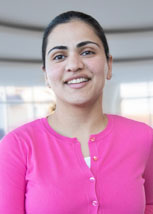
In Hayward, voters first sent Aisha Wahab to public office in 2018, when she finished as the top vote-getter in a seven-candidate field for an at-large City Council seat. She served one term, then won election to the California State Senate from the 10th district in 2022. Sworn in on December 5 of that year, she became the first Muslim and Afghan American in the California State Senate. Her work there has ranged across housing, child welfare, public safety, infrastructure, workforce development and labor protections. Wahab is now also seeking a seat in Congress, with an August 18, 2026, special-election runoff against Melissa Hernandez.
ROOTS
Wahab was born in Queens on January 11, 1987, to Afghan refugees who had fled Afghanistan amid the Soviet–Afghan War. Her father was murdered shortly after her birth; her mother died soon afterward. Wahab and her sister entered foster care and were later adopted by an Afghan couple in Fremont.
She graduated from John F. Kennedy High School, attended Ohlone College and earned a political science degree from San Jose State University in 2010. During and after college, she worked as an account manager and business development director for Bay Area startups. In 2011, amid the economic effects of the Great Recession, she was laid off, her parents lost their business and their home was foreclosed. The family moved to Hayward.
Wahab earned an MBA from California State University, East Bay in 2013 and became an IT consultant after graduate school. In 2024, while serving in the Senate, she completed a doctorate in social work through the Suzanne Dworak-Peck School of Social Work at the University of Southern California.
FROM CITY HALL TO THE SENATE
Wahab’s 2018 City Council result placed her ahead of the rest of the field in her first elected office. In 2019, Bill Quirk recognized her as Woman of the Year from Assembly District 20. She remained on the council through 2022, when she declined to seek re-election and instead ran successfully for the state Senate.
Her first Senate term produced a broad legislative docket. During the 2023–2025 sessions, she authored and coauthored measures involving housing, health and human services, public safety, infrastructure, workforce development and labor protections. In March 2023, she introduced SB 403, a bill with the broad objective of prohibiting caste discrimination. The Senate passed it that May, but Gov. Gavin Newsom vetoed it in October.
Wahab announced a campaign for Congress in California’s 14th district on January 24, 2026. After Eric Swalwell resigned, she also entered the special election for the seat. She received 42.8% in the June 16 first round, sending her to the runoff with Hernandez.
THE RECORD
Housing has occupied a large share of Wahab’s legislative work. Her record includes more than twenty housing-related bills addressing tenant protections, rental practices and housing affordability.
Her work on Alameda County government has followed a different mechanism: audit, findings and continued oversight. In 2024, Wahab requested a state audit of the Alameda County Department of Children and Family Services. The California State Auditor issued Report 2024-108 in September 2025. Wahab’s office established the Alameda County DCFS Audit Implementation Taskforce that December.
Her work on county spending practices proceeded alongside that child-welfare oversight. In February 2026, she introduced Senate Bill 1193, aimed at increasing transparency in discretionary fund awards made by the Alameda County Board of Supervisors. The bill passed the full Senate 37-0 in May 2026. Taken together, the audit request, implementation task force and legislation show how Wahab has approached county governance questions: by seeking formal review, creating an oversight body and proposing statutory requirements.
THE POLICY SIGNATURE
Wahab’s legislative portfolio includes tenant protections, foster-youth welfare and anti-discrimination policy. Her housing-related legislative work has included more than twenty bills addressing tenant protections, rental practices and housing affordability.
Her child-welfare work has included broader measures concerning foster youth, post-adoption protections and service-delivery standards, as well as oversight focused on Alameda County. Wahab is a former foster youth. Her response in Alameda County did not end with obtaining the state audit; her office created a task force to monitor implementation of its recommendations. On discrimination, SB 403 placed an explicit prohibition before the Legislature and won Senate passage before the governor’s veto.
Her other recurring interest is the operation of Alameda County government itself. The child-welfare audit and SB 1193 both concern accountability inside county institutions: how performance is examined, how findings are followed and how discretionary awards are handled. The record identifies Wahab with tenant protections, foster-youth welfare, anti-discrimination policy and formal oversight of local government.
- State Senate · Senate District 10 · 2022–present
In Hayward, voters first sent Aisha Wahab to public office in 2018, when she finished as the top vote-getter in a seven-candidate field for an at-large City Council seat. She served one term, then won election to the California State Senate from the 10th district in 2022. Sworn in on December 5 of that year, she became the first Muslim and Afghan American in the California State Senate. Her work there has ranged across housing, child welfare, public safety, infrastructure, workforce development and labor protections. Wahab is now also seeking a seat in Congress, with an August 18, 2026, special-election runoff against Melissa Hernandez.
ROOTS
Wahab was born in Queens on January 11, 1987, to Afghan refugees who had fled Afghanistan amid the Soviet–Afghan War. Her father was murdered shortly after her birth; her mother died soon afterward. Wahab and her sister entered foster care and were later adopted by an Afghan couple in Fremont.
She graduated from John F. Kennedy High School, attended Ohlone College and earned a political science degree from San Jose State University in 2010. During and after college, she worked as an account manager and business development director for Bay Area startups. In 2011, amid the economic effects of the Great Recession, she was laid off, her parents lost their business and their home was foreclosed. The family moved to Hayward.
Wahab earned an MBA from California State University, East Bay in 2013 and became an IT consultant after graduate school. In 2024, while serving in the Senate, she completed a doctorate in social work through the Suzanne Dworak-Peck School of Social Work at the University of Southern California.
FROM CITY HALL TO THE SENATE
Wahab’s 2018 City Council result placed her ahead of the rest of the field in her first elected office. In 2019, Bill Quirk recognized her as Woman of the Year from Assembly District 20. She remained on the council through 2022, when she declined to seek re-election and instead ran successfully for the state Senate.
Her first Senate term produced a broad legislative docket. During the 2023–2025 sessions, she authored and coauthored measures involving housing, health and human services, public safety, infrastructure, workforce development and labor protections. In March 2023, she introduced SB 403, a bill with the broad objective of prohibiting caste discrimination. The Senate passed it that May, but Gov. Gavin Newsom vetoed it in October.
Wahab announced a campaign for Congress in California’s 14th district on January 24, 2026. After Eric Swalwell resigned, she also entered the special election for the seat. She received 42.8% in the June 16 first round, sending her to the runoff with Hernandez.
THE RECORD
Housing has occupied a large share of Wahab’s legislative work. Her record includes more than twenty housing-related bills addressing tenant protections, rental practices and housing affordability.
Her work on Alameda County government has followed a different mechanism: audit, findings and continued oversight. In 2024, Wahab requested a state audit of the Alameda County Department of Children and Family Services. The California State Auditor issued Report 2024-108 in September 2025. Wahab’s office established the Alameda County DCFS Audit Implementation Taskforce that December.
Her work on county spending practices proceeded alongside that child-welfare oversight. In February 2026, she introduced Senate Bill 1193, aimed at increasing transparency in discretionary fund awards made by the Alameda County Board of Supervisors. The bill passed the full Senate 37-0 in May 2026. Taken together, the audit request, implementation task force and legislation show how Wahab has approached county governance questions: by seeking formal review, creating an oversight body and proposing statutory requirements.
THE POLICY SIGNATURE
Wahab’s legislative portfolio includes tenant protections, foster-youth welfare and anti-discrimination policy. Her housing-related legislative work has included more than twenty bills addressing tenant protections, rental practices and housing affordability.
Her child-welfare work has included broader measures concerning foster youth, post-adoption protections and service-delivery standards, as well as oversight focused on Alameda County. Wahab is a former foster youth. Her response in Alameda County did not end with obtaining the state audit; her office created a task force to monitor implementation of its recommendations. On discrimination, SB 403 placed an explicit prohibition before the Legislature and won Senate passage before the governor’s veto.
Her other recurring interest is the operation of Alameda County government itself. The child-welfare audit and SB 1193 both concern accountability inside county institutions: how performance is examined, how findings are followed and how discretionary awards are handled. The record identifies Wahab with tenant protections, foster-youth welfare, anti-discrimination policy and formal oversight of local government.
The record
7,984 events, each with its sourceAssembly 3rd Reading AB1525 JUD. (Kalra) By Reyes
Unfinished Business SB5 Cabaldon Concurrence
Unfinished Business SB20 Menjivar et al. Concurrence
Unfinished Business SB21 Durazo et al. Concurrence
Unfinished Business SB40 Wiener et al. Concurrence
Unfinished Business SB50 Ashby Concurrence
Unfinished Business SB68 Menjivar Concurrence
Unfinished Business SB86 McNerney et al. Concurrence
Unfinished Business SB261 Wahab et al. Concurrence
Unfinished Business SB262 Wahab et al. Concurrence
Unfinished Business SB275 Smallwood-Cuevas Concurrence
Unfinished Business SB278 Cabaldon et al. Concurrence
Unfinished Business SB279 McNerney et al. Concurrence
Unfinished Business SB291 Grayson Concurrence
Unfinished Business SB301 Grayson Concurrence
Unfinished Business SB306 Becker Concurrence
Unfinished Business SB355 Pérez et al. Concurrence
Unfinished Business SB340 Laird et al. Concurrence
That the Assembly amendments be concurred in
Unfinished Business SB386 Limón Concurrence
Unfinished Business SB411 Pérez et al. Concurrence
Unfinished Business SB419 Caballero et al. Concurrence
Unfinished Business SB437 Weber Pierson et al. Concurrence
Unfinished Business SB454 McNerney et al. Concurrence
Unfinished Business SB504 Laird et al. Concurrence
Unfinished Business SB514 Cabaldon Concurrence
Unfinished Business SB551 Cortese et al. Concurrence
Unfinished Business SB567 Limón Concurrence
Unfinished Business SB597 Cortese Concurrence
Unfinished Business SB625 Wahab et al. Concurrence
Unfinished Business SB642 Limón et al. Concurrence
Unfinished Business SB676 Limón et al. Concurrence
Be re-referred to the Committee on [Rules]
Unfinished Business SB701 Wahab et al. Concurrence
Unfinished Business SB704 Arreguín et al. Concurrence
Unfinished Business SB734 Caballero Concurrence
Unfinished Business SB778 Limón Concurrence
Unfinished Business SB786 Arreguín et al. Concurrence
Assembly 3rd Reading AB5 Berman et al. By Allen
Assembly 3rd Reading AB15 Gipson et al. By Richardson
Assembly 3rd Reading AB50 Bonta By Ashby Urgency Clause
Assembly 3rd Reading AB60 Papan By Weber Pierson
Assembly 3rd Reading AB55 Bonta et al. By Caballero
Assembly 3rd Reading AB57 McKinnor et al. By Smallwood-Cuevas
Assembly 3rd Reading AB62 McKinnor et al. By Smallwood-Cuevas
Assembly 3rd Reading AB255 Haney et al. By Caballero
Assembly 3rd Reading AB316 Krell By Umberg
Assembly 3rd Reading AB320 Bennett By Arreguín
Assembly 3rd Reading AB330 Rogers By McNerney